How Hiking Boots Should Fit: Sizing and Break-In Guide

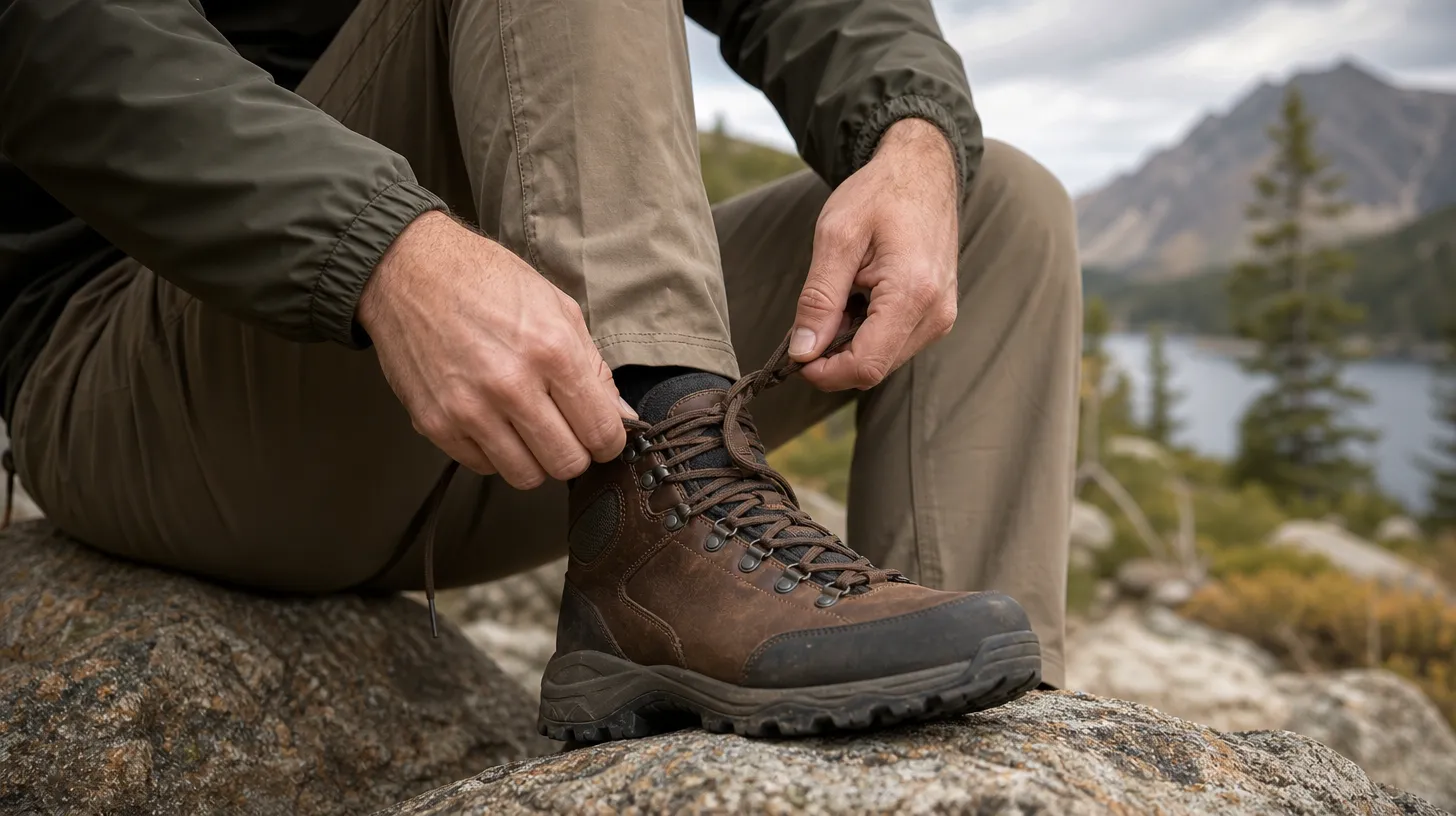
Getting the right fit in a hiking boot is the single most important thing you can do before hitting the trail. Blisters, black toenails, and heel slip don't happen because you're unlucky — they happen because the boot doesn't fit. The good news is that fit is learnable, and once you know what to feel for, you'll never buy the wrong size again.
This article contains affiliate links. We may earn a commission if you make a purchase through our links, at no extra cost to you.
This guide is a companion to our full hiking footwear guide, where we cover how to pick the right boot type for your terrain and hiking style. Here we go deep on the tactile stuff: what a correct fit actually feels like, how to size boots properly, how to break them in without wrecking your feet, and what to do when something goes wrong.
What a correct fit feels like
A well-fitted hiking boot checks four boxes simultaneously.
Locked heel
Your heel should not lift or slip when you walk, especially when flexing your foot forward. A small amount of initial movement on a brand-new boot is normal; it should disappear as the boot warms up and the leather or synthetic upper conforms to your foot. If your heel is rising more than about 3–4mm with every step, the boot is too large or the lacing is wrong.
About a thumb's width of toe room
Press your thumb firmly against the front of the boot while your foot is fully seated inside. You should feel a gap of roughly one thumb's width (around 12–15mm) between your longest toe and the end of the boot. This isn't just comfort — it's protection. On long descents, your feet slide forward, and without that buffer your toes will hammer the toebox with every step, leading to bruised or blackened toenails.
No pinch across the width
Stand on a slight slope (most stores have a ramp for exactly this) and feel the sides of the boot. There should be no squeezing or pinching across the widest part of your foot (the ball). You want snug contact — the boot should envelop your foot without compressing it. If you feel pressure on your pinky toe or the outside of your foot, the boot runs too narrow. Check out our roundup of the best hiking boots for wide feet if you consistently run into this problem.
Secure instep
The top of your foot — the instep — should be held firmly by the laces without any hot spots. Loose volume in the instep causes the foot to shift inside the boot, creating friction and eventually blisters. When you pull the laces snug, the boot should grip your foot like a handshake: firm and intentional, not a squeeze.
How to size hiking boots
Hiking boots often fit differently from your street shoes, and sizing up or down from what you normally wear is common. Follow these steps every time.
Try on late in the day
Feet swell throughout the day — typically by a half size or more. If you try boots on at 9 a.m., they may feel perfect in the store and uncomfortably tight by mile three of an afternoon hike. Shop for boots in the late afternoon or evening to simulate the conditions you'll actually hike in.
Wear your hiking socks
Bring the socks you plan to hike in — a padded merino or synthetic hiking sock is noticeably thicker than an everyday cotton sock, and that difference matters. If you haven't settled on a sock yet, our guide to moisture-wicking hiking socks is a good starting point; the principles apply to both men's and women's socks.
Measure both feet
Feet are rarely the same size. Measure both (or have a salesperson measure them) and fit the larger foot. A standard Brannock device gives you length and width — don't skip the width measurement, as it often explains why boots that seem the right length still feel wrong.
Consider sizing up a half size
Most experienced hikers size up a half size from their street shoe in boots. Combined with a thick hiking sock, this provides the toe room needed for descents and accounts for foot swelling. If you're between sizes, go up rather than down.
Walk on an incline
Always simulate a descent in the store. Lean forward on a ramp and walk downhill. Your toes should not slam into the front of the boot. Then lean back and simulate climbing — your heel should stay seated. A boot that passes both tests on flat ground but fails on a slope will fail on the trail too.
How to break in new hiking boots
Even a well-fitted boot needs to be broken in before a long hike. The materials need to conform to your specific foot shape, and you need to identify any pressure points before you're five miles from the trailhead.
Week 1: short walks around home and town
Start by wearing your new boots for short errands — 30 to 60 minutes at a time. Walk on varied surfaces: stairs, hard floors, uneven pavement. You're letting the insole compress, the upper soften, and the outsole flex to your stride. Pay attention to any spots that rub or press — those are your early-warning signals.
Week 2: short trail walks (1–3 miles)
Go on short, low-stakes trail walks with your new boots. A well-maintained park trail or easy nature walk is perfect. Carry a small pack so the boots experience some load. Bring your old boots as a backup in case a hot spot becomes a problem.
Week 3 and beyond: gradually longer hikes
Increase distance and terrain difficulty week by week. By the time you've put 10–15 miles on a boot, most of the break-in is done. After 20–30 miles, they should feel like yours.
What to never do
Don't wear brand-new boots on your first big hike of the season, a multi-day trip, or an especially long day hike. The result is almost always blisters. The Merrell Moab line (see below) is famously easy to break in — often wearable on a moderate day hike after just a few short walks — but even it benefits from a break-in period.
Lacing techniques that solve fit problems
Lacing is one of the most underused tools for dialing in boot fit. Two techniques solve the most common problems.
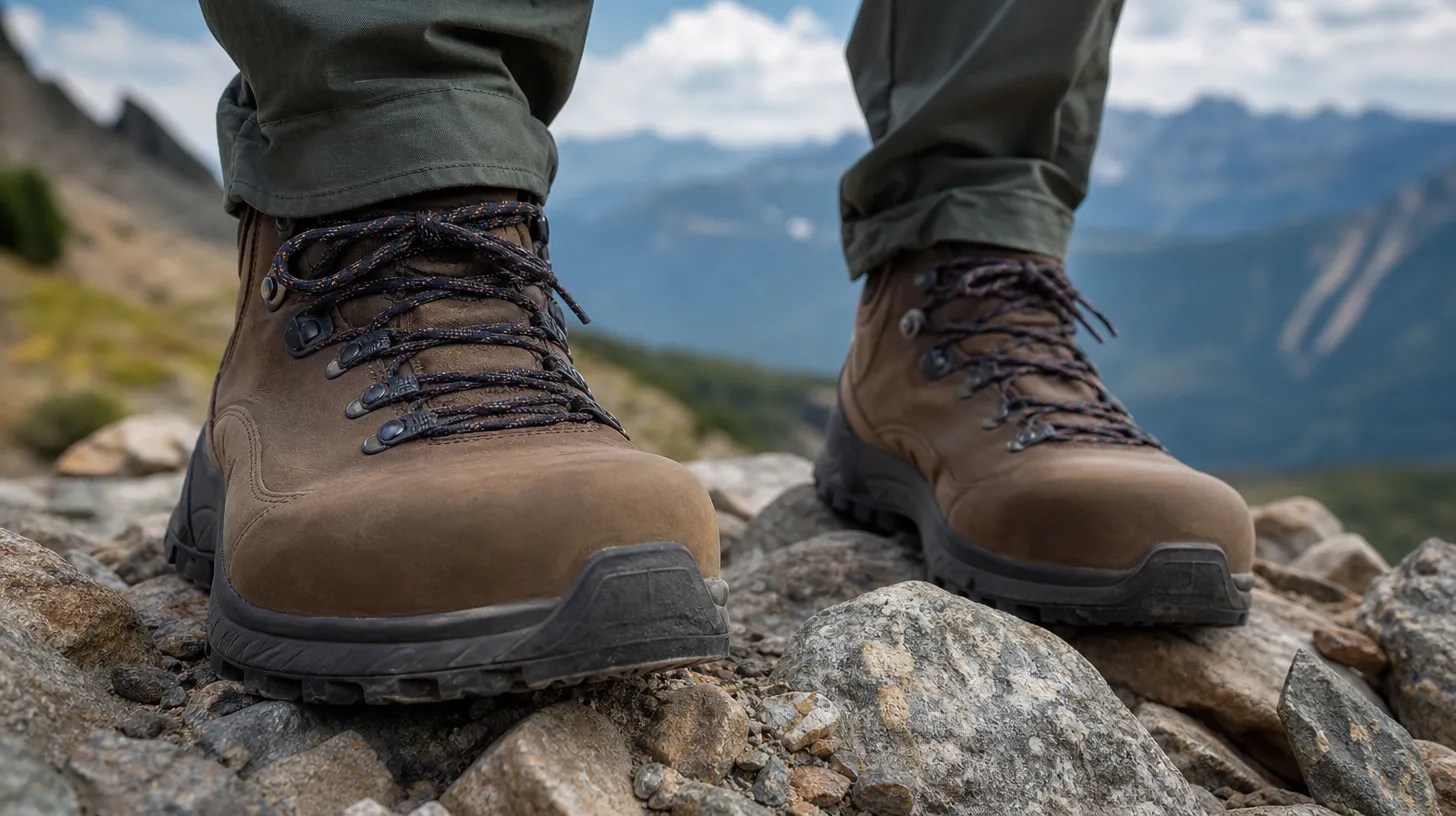
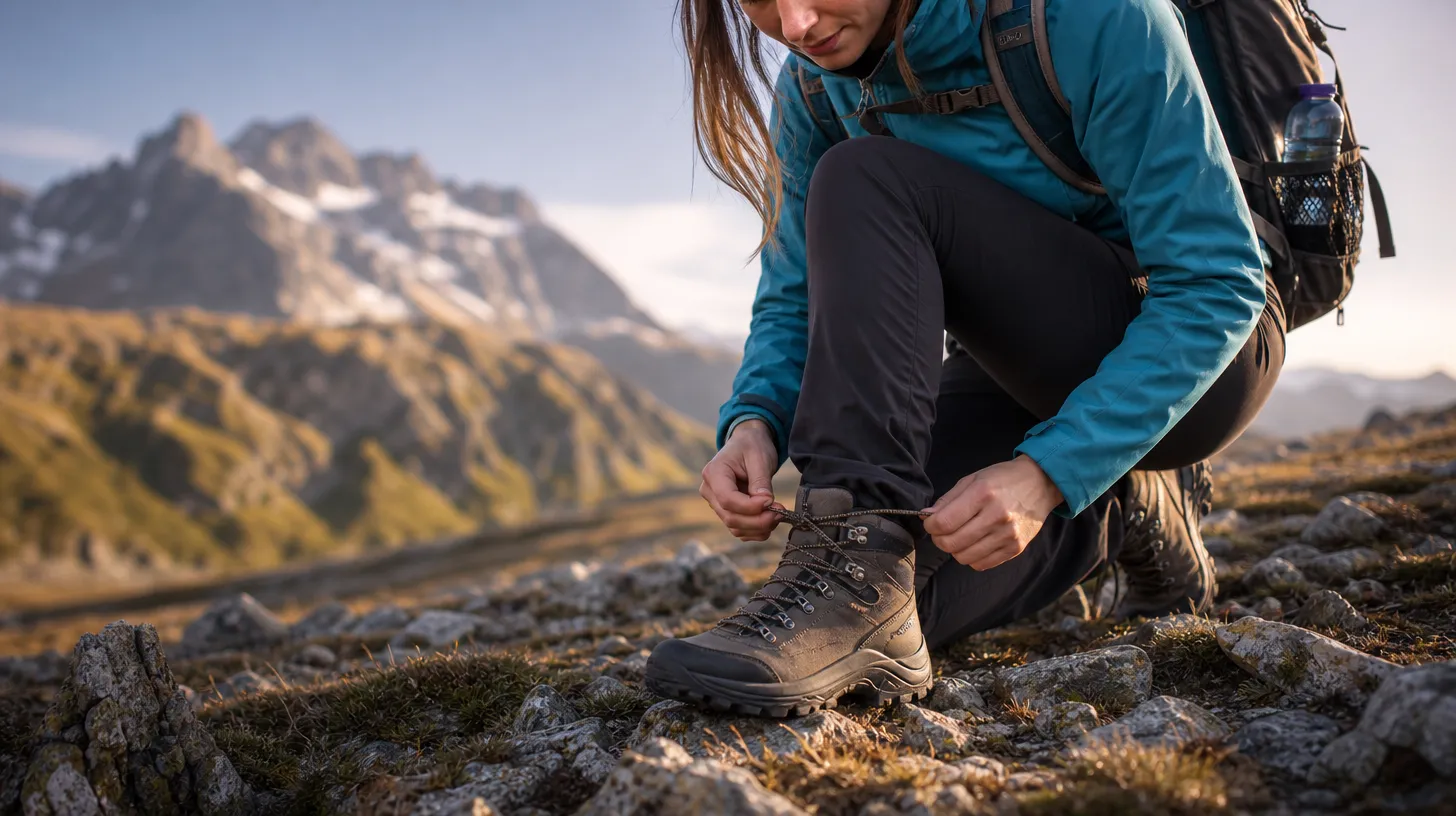
Heel-lock lacing (surgeon's knot)
If your heel slips, the heel-lock — sometimes called a surgeon's knot — is the fix. Here's how to do it:
- Lace the boot normally up to the second-to-last set of hooks.
- At the ankle hooks, instead of crossing straight to the next hook, wrap the two laces around each other twice — a double overhand — before continuing. This friction lock holds the tension below it, preventing the heel from rising.
- Cross the laces and continue to the top hook as normal.
- Tie your bow as you normally would.
The double wrap at the ankle hooks is what locks the laces at that point. Most hikers who suffer from heel slip find this technique eliminates the problem entirely.
Window lacing (box lacing) for pressure points
If you have a pressure point or hot spot on the top of your foot — common at the instep or across a prominent bone — window lacing relieves it without loosening the whole boot:
- Identify the two sets of eyelets on either side of the pressure point.
- Run the laces straight across (not diagonally) between those sets — creating a "window" or "box" that skips the pressure area.
- Continue lacing diagonally above and below as normal.
This skips the tension over the sore spot while keeping the rest of the boot snug. It works well for hikers with high arches or prominent tendons.
Common fit problems and how to fix them
Heel slip
What it is: Your heel rises with every step, especially going uphill. The fix: First try heel-lock lacing (above). If heel slip persists even with proper lacing, the boot is likely too wide in the heel cup or too large overall. Try a half size down, or a different brand whose heel geometry better matches yours.
Black or bruised toenails
What it is: Your toes are hitting the front of the boot on descents. The fix: You need more toe room. Size up a half size, or try a boot with a roomier toebox. Make sure you're lacing the boot snugly enough to keep your foot seated toward the heel — a loose boot lets the foot slide forward.
Pinching on the sides
What it is: Pressure on the ball of your foot, the pinky toe, or the big toe joint. The fix: Try a wider fit. Many boots come in standard and wide widths. Brands like KEEN and Merrell (Moab line) are consistently cited for a roomy, wide-friendly fit. See our guide to best hiking boots for wide feet for specific picks.
Pressure on the instep
What it is: Pain or numbness on top of your foot, usually mid-boot. The fix: Try window lacing first. If that doesn't help, the boot may have too low a volume for your foot shape — look for boots described as "high-volume" or with a generous instep.
Signs your boots are too big
- Heel slip that doesn't respond to heel-lock lacing
- Your foot sliding forward on descents despite snug lacing
- Blisters on the heel or sides from excessive movement inside the boot
- A "sloshing" feeling when you walk
Signs your boots are too small
- Toes cramped or touching the front of the boot when standing
- Numbness in the toes, especially on descents
- Pain across the ball of the foot or on the pinky toe
- Blisters on the tips of toes
The role of socks and insoles
Socks
The sock is part of the fit equation. A thin sock in a boot sized for a thick sock will give you the same heel slip as a boot that's too big. Conversely, a thick sock in a tight boot is a blister waiting to happen. Always try boots with the socks you'll actually use, and keep that pairing consistent. Non-cotton hiking socks — merino wool or synthetic — also reduce friction and hot spots compared to cotton, which compresses into a damp, abrasive mat.
Insoles
Most stock insoles are decent but generic. If you have flat feet, high arches, or persistent arch or heel pain, a third-party insole (brands like Superfeet or Sole are popular with hikers) can transform an uncomfortable boot into a comfortable one. Insoles add volume, so if you plan to use aftermarket insoles, either size the boot with them in from the start or choose a boot known for extra interior depth.
A boot we often recommend for easy fitting
A Famously Easy-Fitting Boot
Merrell Men's Moab 3 Mid Waterproof Hiking Boot
The Merrell Moab 3 has been the world's best-selling hiking boot for years, and the fit is a big reason why. It's built on a last that suits a wide range of foot shapes out of the box: neither aggressively narrow nor so wide that it feels sloppy. The Moab 3 Mid adds a waterproof membrane, a partly recycled footbed, and a Vibram TC5+ outsole without losing that forgiving, easy-to-love fit. It also breaks in faster than almost any other mid boot — most hikers find it comfortable after just a few short walks. At around $116 as of mid-2026, it's the boot we most often recommend to beginners who want something that will fit well on the first try.
For women-specific fits and lasts, see our best hiking boots for women guide and for men's-specific picks, our best hiking boots for men guide.
Frequently asked questions
How much toe room should hiking boots have? About a thumb's width — roughly 12–15mm — between your longest toe and the end of the boot. This protects your toes on descents and accounts for foot swelling on long hikes. Too little room leads to bruised toenails; too much room causes your foot to slide forward and creates heel slip.
Should hiking boots be tight or loose? Neither. They should be snug at the heel and instep, with room for your toes to splay and a thumb's width in front. "Snug" means the boot holds your foot without compressing it. A boot that feels tight anywhere in the store will feel worse on the trail — don't buy boots expecting to stretch them.
How long does it take to break in hiking boots? For most modern boots with synthetic uppers, 10–20 miles of progressively longer walks is enough. Traditional leather boots can take 30–50 miles. The Moab line is notable for requiring very little break-in. Whatever boot you buy, do not debut it on a long, demanding hike.
Can I wear hiking boots right out of the box? For a very short, easy walk, yes. For anything over a few miles — especially with a pack or on uneven terrain — break them in gradually first. The uppers need to conform to your foot, and you need to find any pressure points before they become blisters far from the trailhead.
Why do my boots fit fine at the store but hurt on the trail? Three common reasons: (1) You tried them on in the morning when your feet were smaller — feet swell by up to a half size during the day and under load. (2) The grade matters — a flat store floor doesn't reveal how the boot fits on a descent. (3) Break-in — materials that haven't conformed yet create hot spots that don't appear until after an hour of hiking.
Do I need to size up in hiking boots? Most hikers size up a half size compared to their everyday shoes. The combination of a thick hiking sock, foot swelling, and the need for toe room on descents usually justifies it. If you're right on the border between sizes, go up.
What causes heel slip in hiking boots? Usually a combination of too-large a boot, insufficient lacing tension at the ankle, or a heel cup that doesn't match the shape of your foot. Try heel-lock lacing first; if that doesn't fix it, the boot isn't the right shape for your foot.
The bottom line
A hiking boot that fits correctly is one of the best investments you can make for your time on the trail. The checklist is short: locked heel, a thumb's width of toe room, no width pinch, secure instep. Buy in the late afternoon, wear your real hiking socks, measure both feet, and walk a ramp in the store before you commit. Then break the boots in gradually — a few short walks before a longer day hike, and longer day hikes before a multi-day trip.
For a broader look at how to choose between boots, trail runners, and hiking shoes — and what features matter for different terrain types — revisit our complete hiking footwear guide. And if you're ready to shop, our best hiking boots for women and best hiking boots for men roundups list the top-rated options for 2026 across every budget and terrain type.
The picks

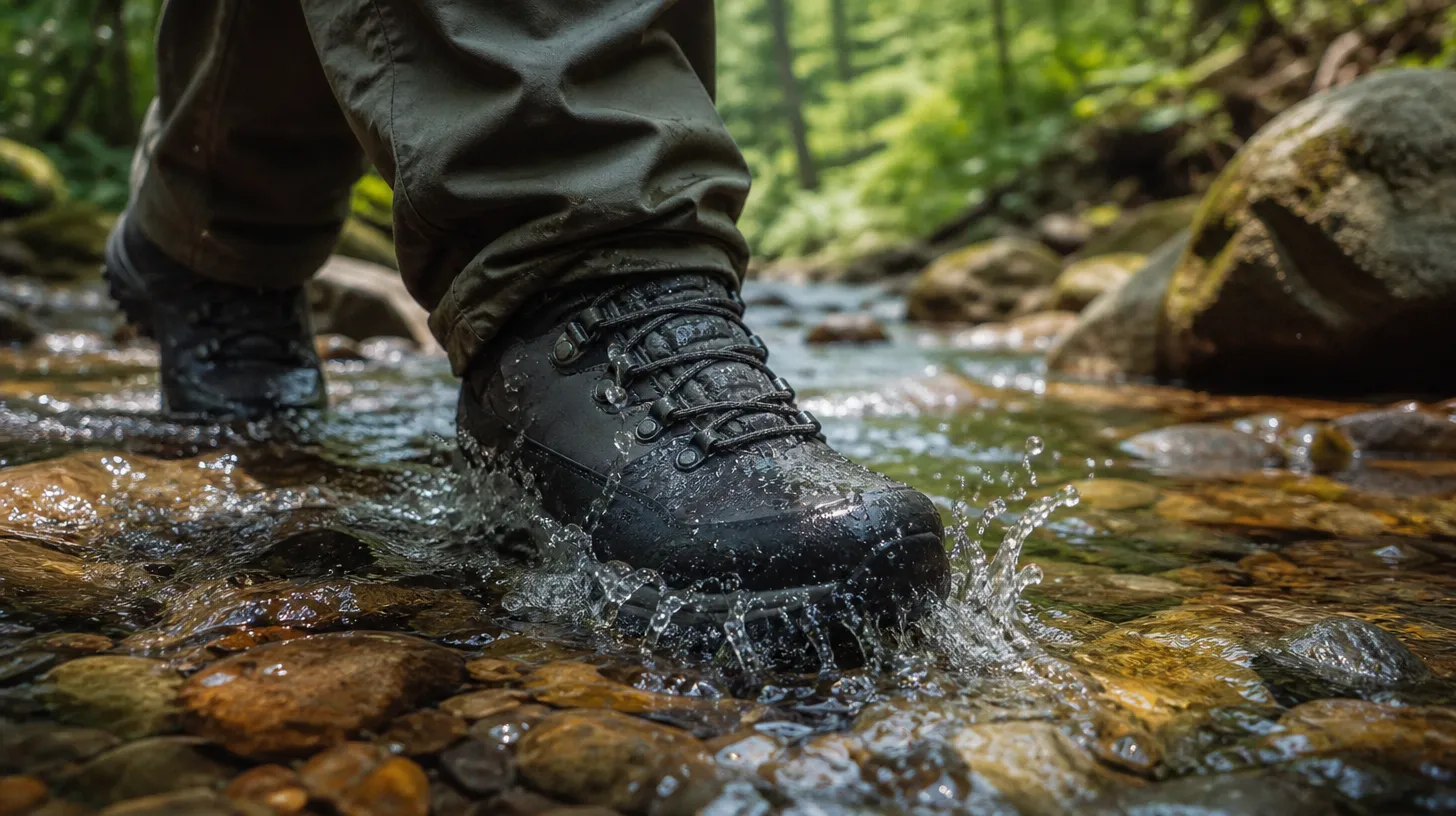
The Moab 3 Mid is built on a last famous for accommodating a wide range of foot shapes without fuss. The mid-cut height locks the ankle on technical terrain, the waterproof membrane keeps feet dry in mud and stream crossings, and the Vibram TC5+ outsole delivers reliable grip on rock and dirt. It breaks in faster than nearly any comparable boot — a key reason it remains one of the world's best-selling hiking boots — and its slightly roomy toebox makes it a natural recommendation for hikers still dialing in their fit.
Head-to-head
About the author
Victoria Miller
Victoria Miller is passionate about literature and outdoor adventures. After completing her undergraduate studies at the University of Utah, she spent a year traveling and hiking throughout New Zealand and Europe. She is an avid reader and has a penchant for escaping into worlds of her own creation.