The Ten Essentials for Hiking

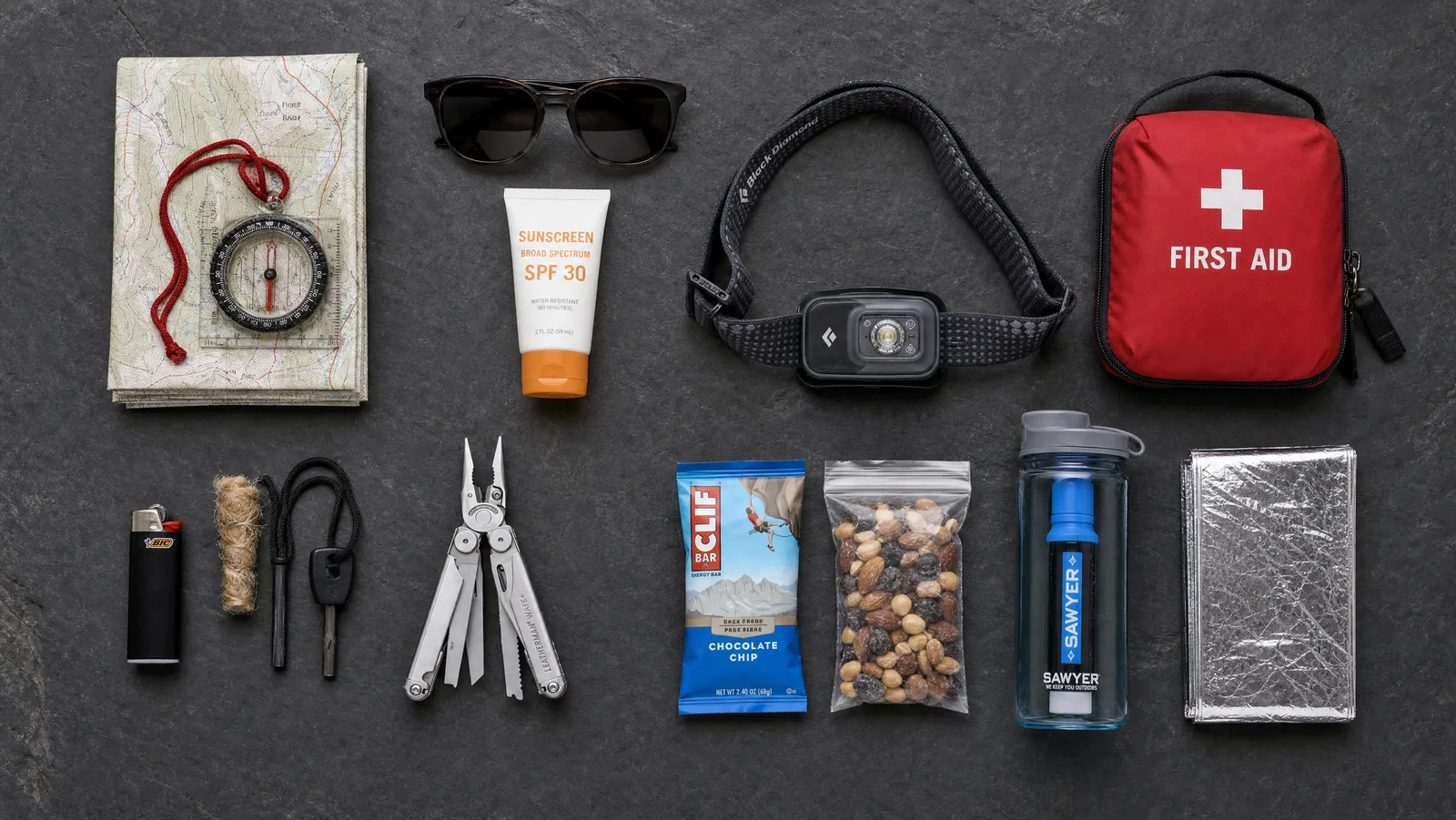
If you only learn one thing before your first hike, make it the Ten Essentials. It's a simple checklist of ten categories of gear that search-and-rescue teams, guidebooks, and seasoned hikers use to make sure a small problem—a wrong turn, a twisted ankle, a hike that runs past dark—doesn't turn into a real emergency. Carry these ten things, know how to use them, and you can handle almost anything a day hike throws at you.
This article contains affiliate links. We may earn a commission if you make a purchase through our links, at no extra cost to you.
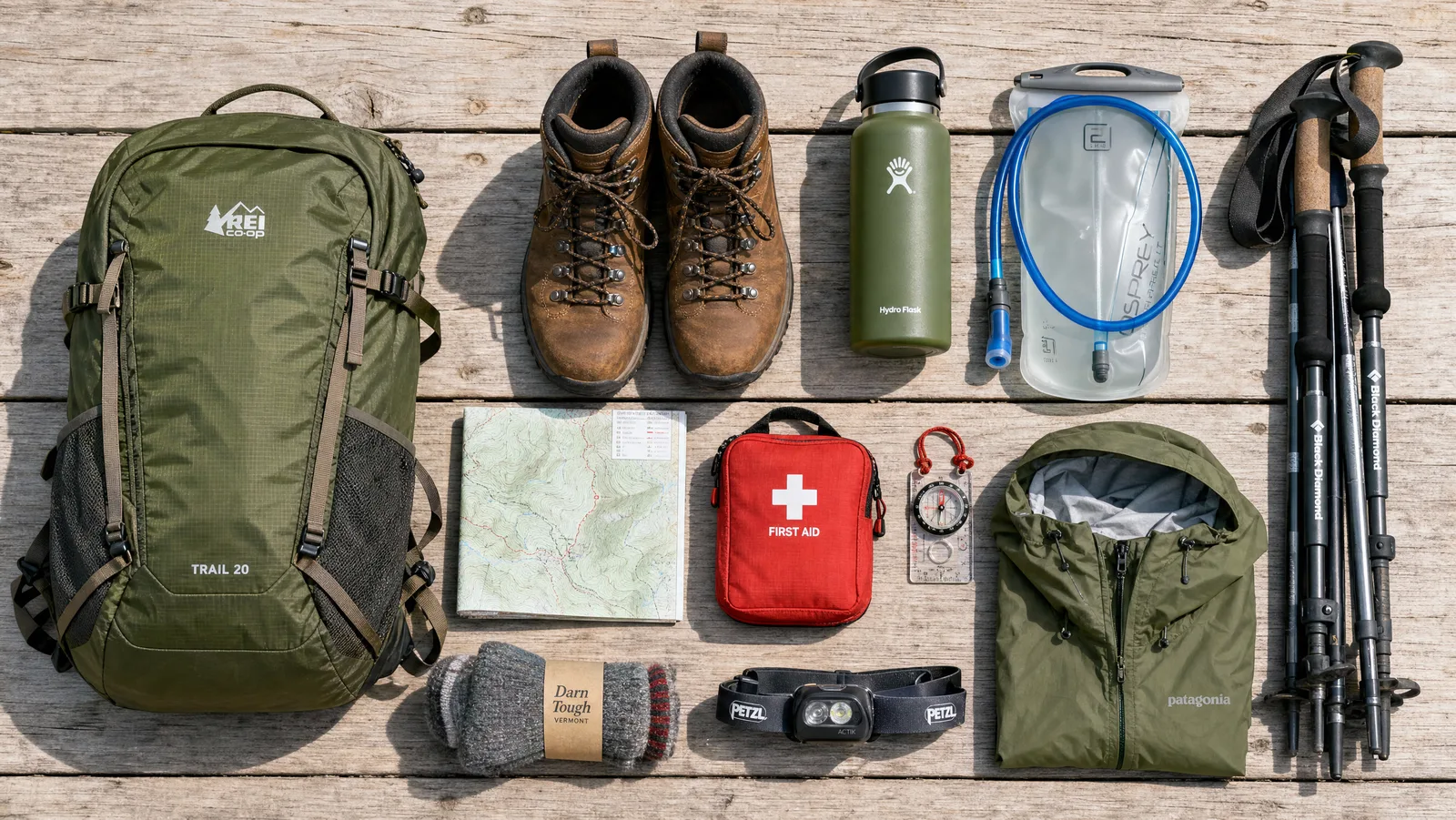
The Ten Essentials are the backbone of our full hiking gear for beginners checklist. Here we'll go through each one, why it matters, and how to scale it from a short local trail to a remote all-day route.
Where the "Ten Essentials" came from
The list was created in the 1930s by The Mountaineers, a Seattle-based climbing organization, to answer two questions: Can you respond to an emergency? Can you safely spend a night (or more) outside if you have to? The modern version groups gear into ten systems rather than ten exact items—so you scale each one to the trip.
The Ten Essentials, one by one
1. Navigation
A map and compass don't need batteries and won't lose signal. Carry both, learn the basics, and back them up with a downloaded offline map on your phone or a dedicated GPS. On remote, no-signal trails, add a satellite communicator so you can call for help—see our guide on hiking safely with an emergency satellite communicator.
2. Sun protection
Sunburn and eye strain are real on exposed trails and at altitude. Pack sunscreen, SPF lip balm, sunglasses, and a brimmed hat. Reapply sunscreen every couple of hours.
3. Insulation (extra clothing)
Weather changes fast. Bring one more layer than you think you need—usually a packable insulating layer and a rain shell. Our what to wear hiking layering guide covers exactly how to build this.
4. Illumination
Always carry a headlamp, even on a "short" day hike—the one time a hike runs long, you'll be hiking out in the dark. A compact rechargeable model like the Nitecore NU25 headlamp (around $37) weighs next to nothing and frees up both hands. Pack a spare battery or charge it fully before you go.
5. First aid
A compact, hike-specific kit handles blisters, cuts, and sprains. The key is knowing how to use what's inside—read the contents at home first. See our roundup of the best hiking first-aid kits for kits sized from day hikes to multi-day trips.
6. Fire
Waterproof matches, a lighter, or a ferro rod plus a bit of tinder can keep you warm or signal for help. Store them in a waterproof bag.
7. Repair kit and tools
A small multi-tool or knife, plus a few feet of duct tape (wrap it around your water bottle) and some cordage, fixes most field problems—a broken pack strap, a flapping boot sole, a torn jacket.
8. Nutrition
Pack more food than the hike requires, including a day's worth of extra calories that stay in your pack as backup. Bars, trail mix, and jerky travel well and don't spoil.
9. Hydration
Carry enough water—roughly half a liter per hour of moderate hiking—and a way to treat more. A lightweight filter such as the LifeStraw Personal Water Filter filters out bacteria and parasites so you can refill from a stream (straw-style filters don't remove viruses or chemicals, but those are rarely a concern in North American backcountry water). For bottles and bladders, see our guides to hiking water bottles and hydration bladders.
10. Emergency shelter
A space blanket, emergency bivy, or even a large trash bag can keep you alive if you're stuck out overnight. A reflective option like this emergency foil thermal blanket (around $17) weighs almost nothing and lives permanently in your pack.
How to scale the Ten Essentials to your trip
You don't carry the same kit for a one-mile nature loop as for a 12-mile alpine route. Think in tiers:
- Short, popular, well-marked trail: lightweight versions of all ten—phone map, mini first-aid kit, headlamp, snack, water, space blanket.
- Longer or hillier day hike: add a paper map and compass, water filter, extra layer, and more food.
- Remote / no-signal terrain: add a satellite communicator, a fuller first-aid kit, and a sturdier shelter.
The categories never change—only the depth does.
Common beginner mistakes
- Carrying gear you can't use. A compass or first-aid kit only helps if you've practiced. Spend ten minutes at home learning each item.
- Skipping the "it's just a short hike" essentials. Most rescues happen on short, familiar trails where people felt they didn't need anything.
- One battery for everything. Don't let your phone be your only map, light, and communicator.
Frequently asked questions
Do I really need all ten on a short hike? Yes—but in lightweight form. The whole point is that emergencies happen on easy trails too. A pared-down version of all ten fits in a small daypack and weighs little.
What's the single most important essential? For most day hikers, it's a tie between water/hydration and navigation. Dehydration and getting lost cause the majority of preventable trail trouble.
How much does a Ten Essentials kit weigh? A lightweight day-hike version adds roughly 2–4 pounds, most of which is water. It easily fits in a 20-liter pack.
The bottom line
The Ten Essentials aren't about carrying more—they're about carrying the right ten things and knowing how to use them. Build them into every hike and they'll fade into the background until the day you really need them. Ready to assemble the rest of your kit? Head back to our complete beginner hiking gear checklist, or grab our printable day hiking gear list before your next trip.
About the author
Victoria Miller
Victoria Miller is passionate about literature and outdoor adventures. After completing her undergraduate studies at the University of Utah, she spent a year traveling and hiking throughout New Zealand and Europe. She is an avid reader and has a penchant for escaping into worlds of her own creation.