Hiking Footwear: How to Choose the Right Boots and Shoes

Your feet are the engine of every hike. Get the footwear right and you can happily cover ten miles on rough terrain; get it wrong and a two-mile walk turns into a blister-and-agony slog. This is our complete hiking footwear guide—how to choose hiking boots or shoes that match your terrain, your feet, and your budget, with links to every in-depth roundup we've written so you can go as deep as you need.
This article contains affiliate links. We may earn a commission if you make a purchase through our links, at no extra cost to you.
If you are just getting started with gear as a whole, our hiking gear for beginners checklist covers everything you need from pack to poles. But footwear is where that guide tells you to spend first—and this is where you spend it wisely. Reliable, comfortable options exist at every price point; the sections below help you find the pair that works for your feet and your trails.
The three categories of hiking footwear
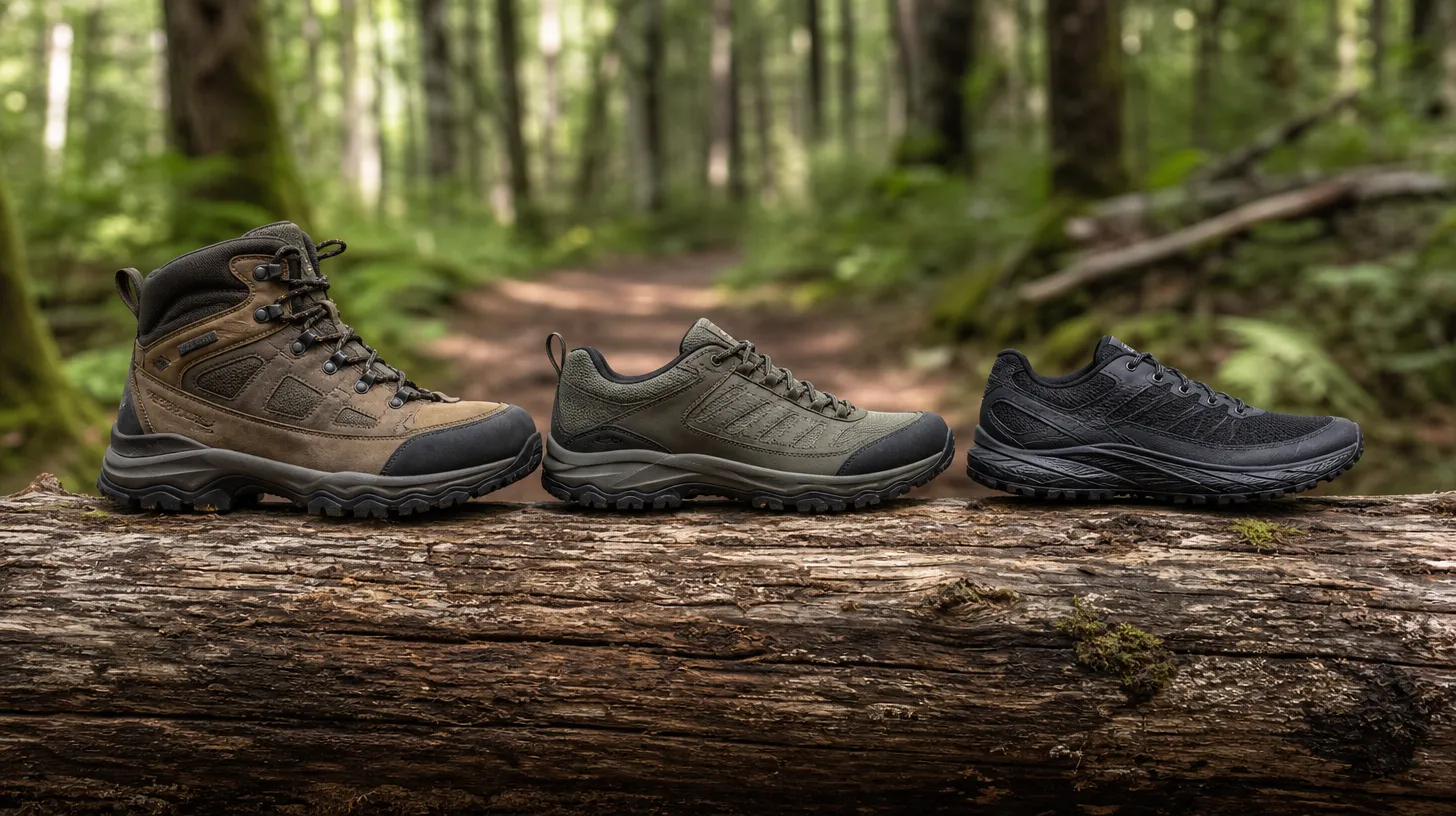
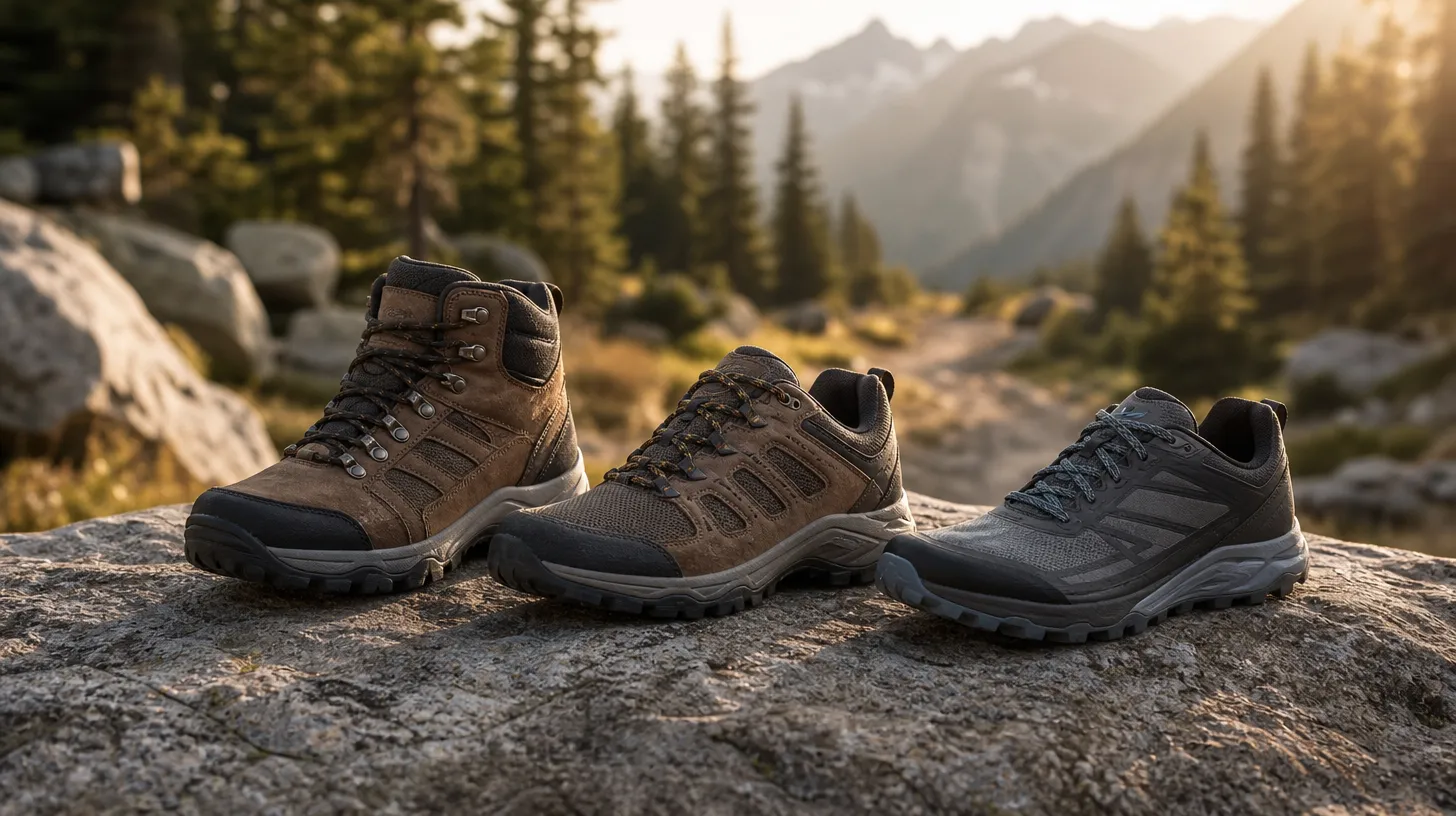
Before diving into how to choose, it helps to know the landscape. Hiking footwear falls into three broad families, each with a different set of trade-offs. We go deep on all three—weights, protection levels, and specific terrain use cases—in our dedicated hiking boots vs hiking shoes vs trail runners comparison. Here is the thirty-second version.
Hiking boots (mid and high-cut)
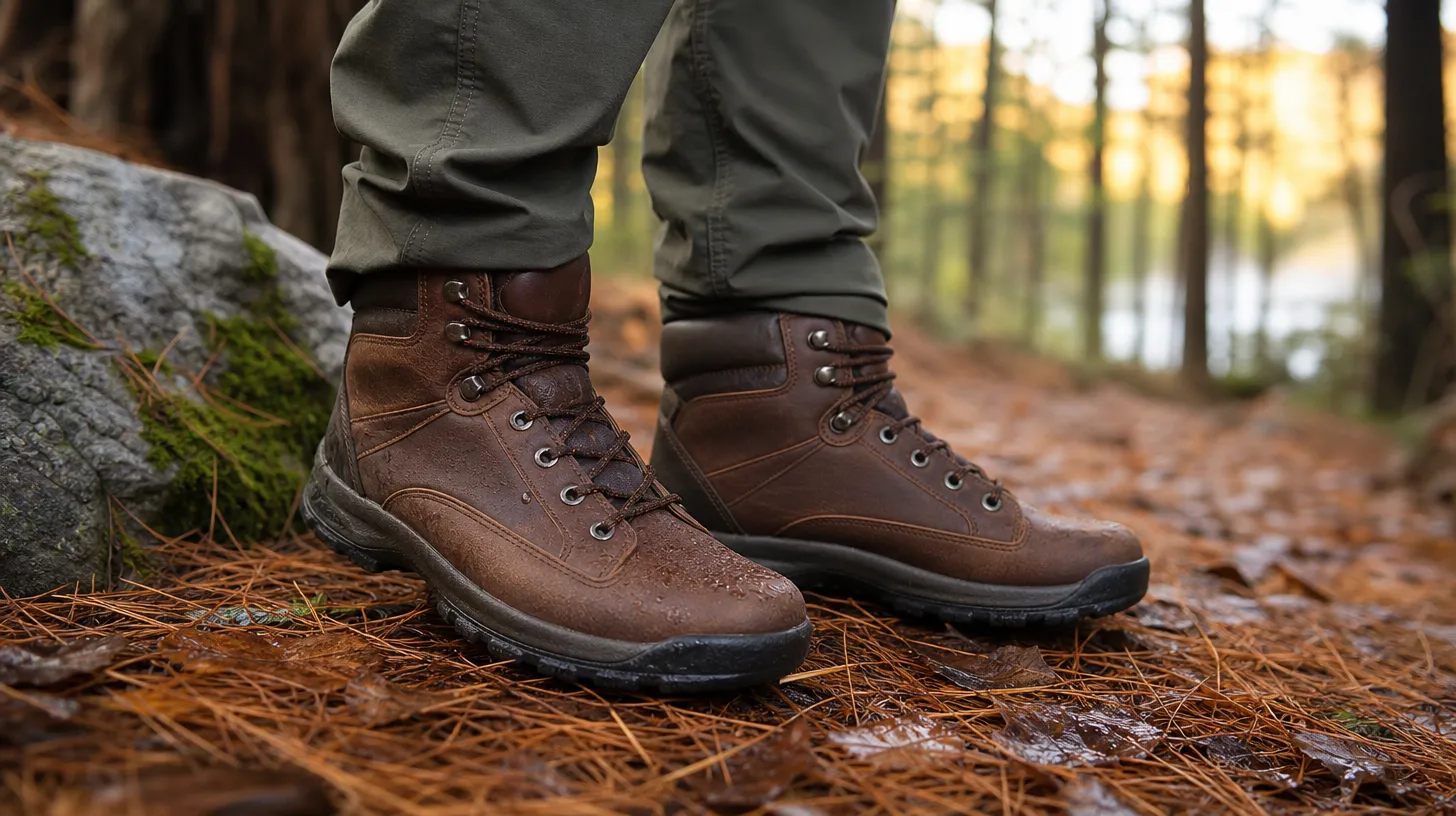
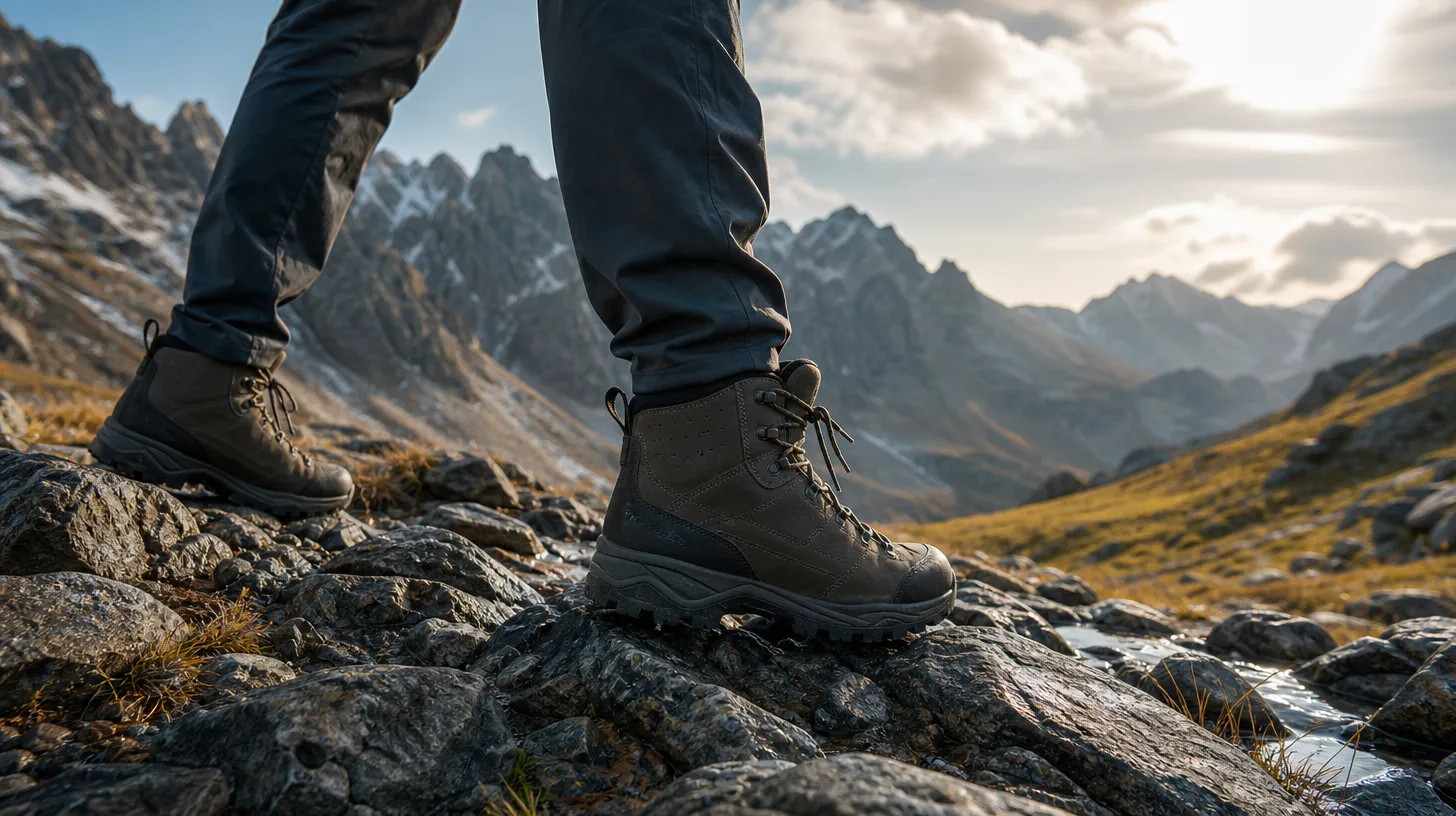
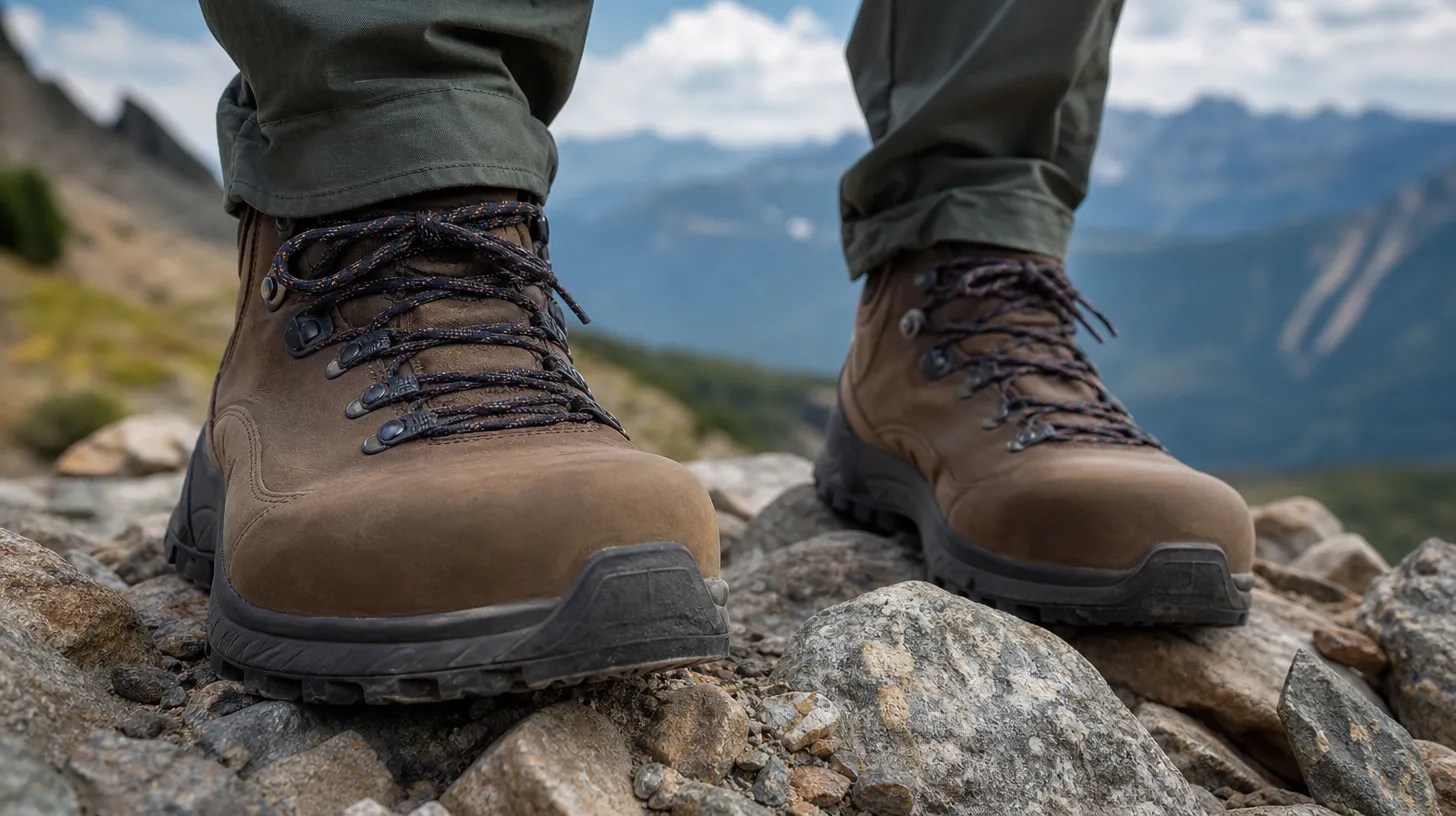
Ankle-high or above, usually waterproofed with GORE-TEX or a similar membrane, and built with a stiffer, more supportive midsole for carrying a load over rough ground. They are the most protective option and the best choice for heavy packs, technical terrain, scrambling, and cold or wet conditions. The main trade-off is weight and warmth: a full leather or synthetic boot can be twice as heavy as a trail runner, and most membrane-lined models run warmer than a mesh shoe. On the upside, boots last longer (typically 500–1,000+ miles depending on terrain and construction) and take more abuse before showing wear.
Hiking shoes (low-cut)
Low-cut footwear built specifically for hiking—more structured, protective, and trail-tuned than a casual sneaker or road-running shoe, but lighter and cooler than a mid or high boot. This is the sweet spot for most day hikers on maintained trails who carry a daypack rather than a full backpacking load. They break in faster, ventilate better, and feel more natural for all-day walking. Our dedicated roundups cover the best women's hiking shoes in 2026 and the best men's hiking shoes if you want to go straight to picks.
Trail running shoes
The lightest option and the fastest-growing category in hiking footwear. Built for running but embraced by fast hikers, ultralight backpackers, and thru-hikers who value weight savings and quick-drying mesh over ankle coverage and heavy-duty protection. Trail runners excel on well-maintained, lower-consequence trails with a light pack; they are less ideal for gnarly off-trail terrain, boulder scrambles, or multi-day loads over 25 lbs. Many have zero or minimal heel-to-toe drop, which changes how your foot strikes the ground and requires a short adaptation period if you're coming from traditional footwear.
How to choose hiking footwear: 6 key decisions
Every person who walks into a gear store has a different set of feet, a different set of trails, and a different budget. Rather than hand you a single answer, we want to walk you through the six decisions that actually determine which pair is right for you.
1. Match footwear to your terrain and hiking style
The most important question is not "which brand is best" but "what will I actually hike on?" Start here before you look at a single product page.
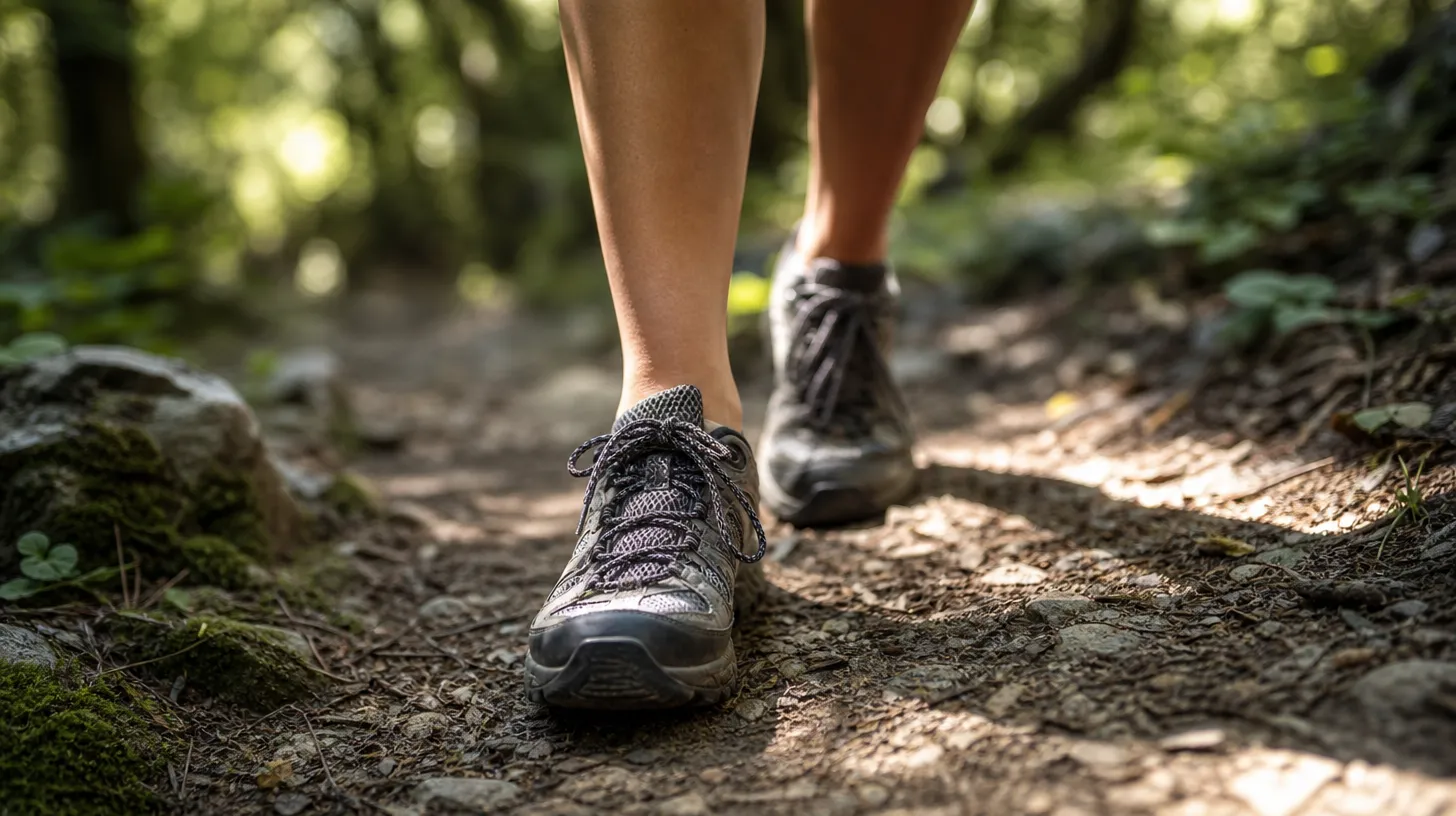
- Flat, maintained day trails with a light daypack (under 15 lbs): a hiking shoe or trail runner is plenty—and more comfortable out of the box than a stiff boot. Most beginners on established park trails fall into this category and overbuy into heavy boots they don't need.
- Rocky, off-trail, or route-finding terrain with a moderate pack (15–30 lbs): a low-cut hiking shoe with a stiff-enough outsole or a mid-cut boot starts to pay off. The extra structure reduces fatigue when you're constantly reading the ground and repositioning.
- Multi-day backpacking with a heavy load (30+ lbs) or sustained scrambling on technical terrain: a mid or high-cut boot earns its extra weight in ankle support, midsole stiffness, and durability. The protection matters when your pack multiplies every foot-placement mistake.
- Wet, muddy, or cold conditions year-round: prioritize a waterproof membrane regardless of cut height—your feet getting soaked in cold water leads to cold feet, blisters, and miserable miles.
- Hot, dry, high-mileage summer days: prioritize breathable mesh and light weight. A waterproof membrane traps heat and sweat in dry conditions, which is more uncomfortable than getting your feet damp.
Unsure where you fall? Our boots vs shoes vs trail runners guide works through this decision in more detail with real terrain examples.
2. Ankle support: do you actually need it?
Ankle support is the most over-sold feature in hiking footwear marketing. The honest answer is nuanced: it depends on your load, your terrain, and your individual ankle history.
High-cut boots brace the ankle against inversion on very uneven ground and genuinely help when you carry a heavy pack that shifts your center of gravity—the load torques your ankle on every uneven step in ways that a light-pack hike does not. They also help if you have a documented history of ankle sprains or instability. However, for most day hikers on marked trails with a light daypack, a well-fitted low-cut shoe is lighter, more agile, faster to break in, and produces no meaningful increase in ankle injury risk compared to a boot. Research on this topic is fairly consistent: strong ankles and good proprioception matter more than the collar height of your shoe.
The practical takeaway: don't buy more boot than your terrain and load demand. If you're going from couch to trail, a hiking shoe is the right starting point for 80 percent of hikers.
3. Waterproof membrane vs breathable mesh
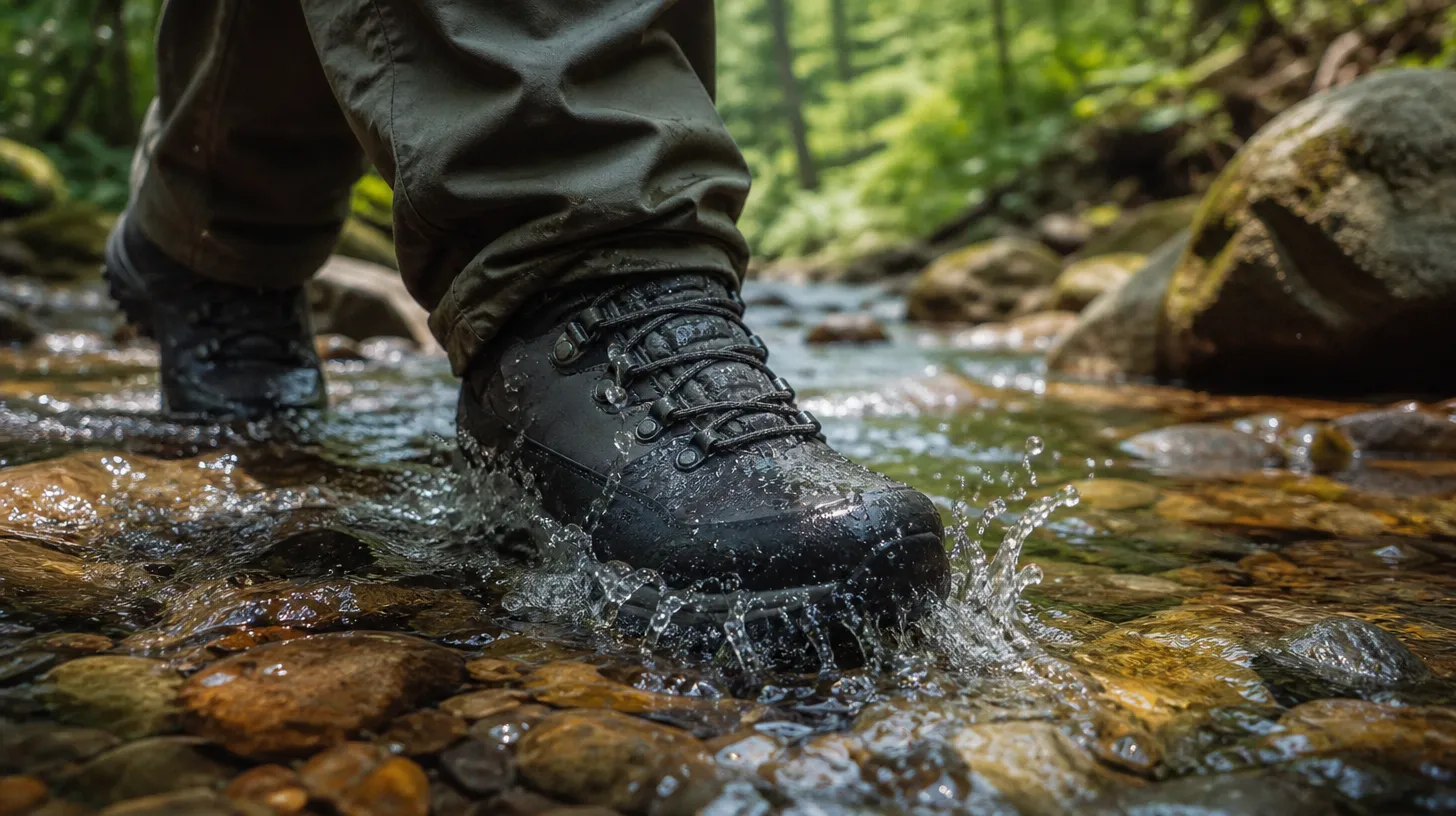
This is a genuine trade-off, not a question of quality—and it is one of the most common sources of buyer's regret in hiking footwear. A waterproof membrane (GORE-TEX, OutDry, M Select DRY, Keen.Dry, and others) keeps rain, puddles, mud, and shallow stream crossings from soaking your feet. The catch: no membrane is breathable in the same way a mesh shoe is. When you generate heat on a climb or a warm day, the moisture your feet produce has nowhere to go, and you can develop sweat blisters inside an otherwise-dry boot.
Breathable mesh, by contrast, lets your feet ventilate freely. If your feet do get wet—splashing through a puddle or a light rain—they dry out much faster than a membraned boot allows. In warm-weather hiking on dry trails, many experienced hikers actually prefer mesh because dry-and-slightly-wet beats sealed-and-sweating any day.
Rule of thumb: choose waterproof for hiking in the Pacific Northwest, the Appalachian Trail's shoulder seasons, alpine environments where afternoon thunderstorms are common, or anywhere sustained rain or wet meadows are routine. Choose breathable mesh for the desert Southwest, hot summer trails in dry climates, or any situation where you are more likely to overheat than get rained on. See our best waterproof hiking boots roundup for the best membraned picks at every price point, with notes on which membranes breathe best within the waterproof category.
4. Fit: the non-negotiable factor
Every other feature on this list is secondary to getting the fit right. A poorly fitting premium boot destroys feet faster than a well-fitting budget shoe—and no amount of cushioning, waterproofing, or Vibram rubber compensates for a pair that doesn't match your foot shape. Here are the rules that actually matter when fitting hiking footwear:
- Shop late in the day. Feet swell throughout the day and during hikes—by as much as half a size. Shoes that feel fine at 9am can feel painfully tight at mile five. Buy footwear in the afternoon or evening when your feet are at their largest.
- Wear your actual hiking socks. This sounds obvious but is routinely skipped. A thick merino or synthetic hiking sock adds meaningful volume inside the shoe. Fitting boots with thin dress socks is why so many people end up with blisters. See our picks for best moisture-wicking hiking socks for women if you need recommendations—the guidance applies equally to men's socks.
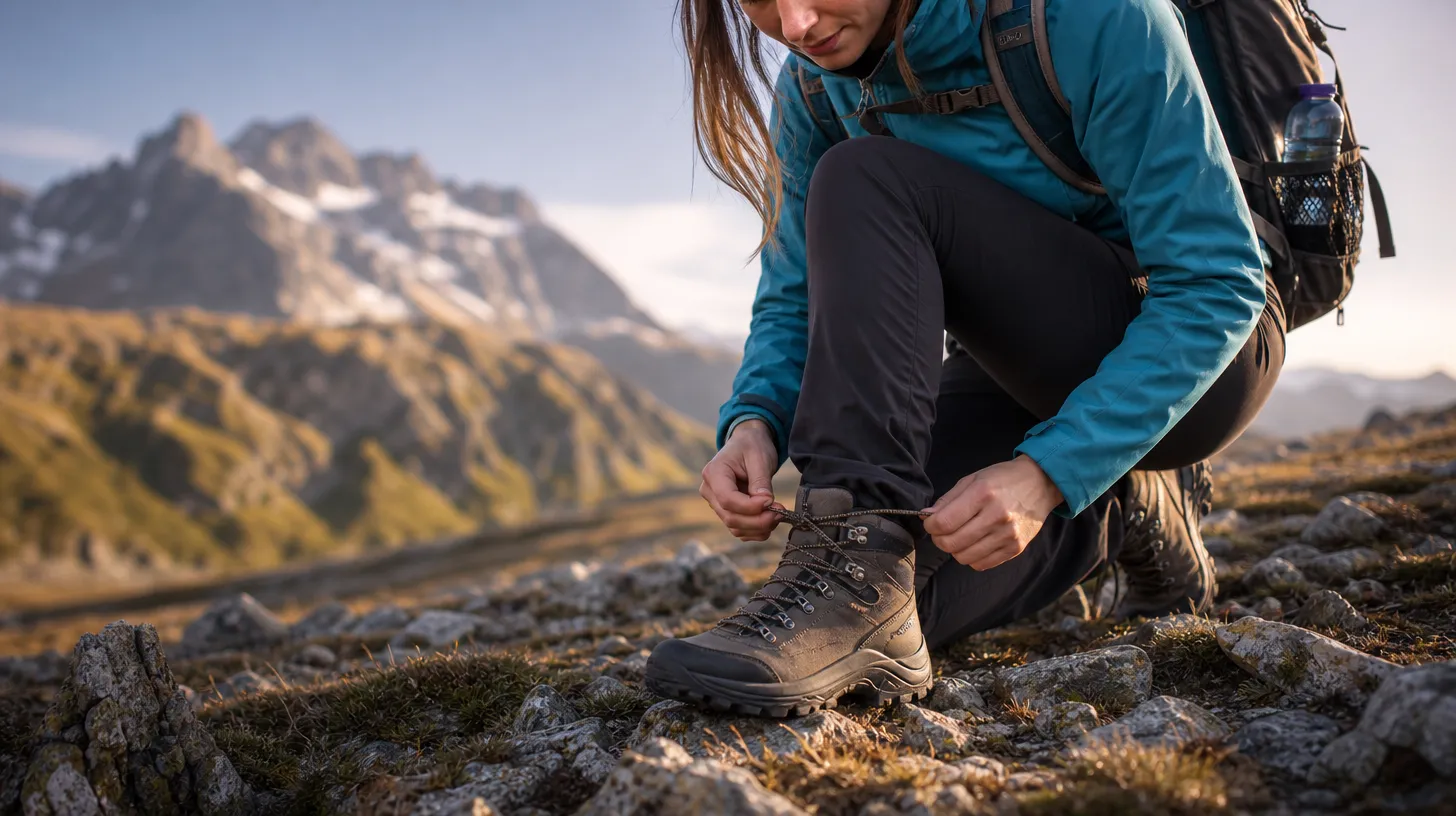
- Heel first. Your heel should sit locked in the heel cup with almost no vertical slip when you walk. Heel slippage is the primary cause of blisters on long descents. Lace tightly through the ankle eyelets to lock the heel down.
- Toe room, not toe box crush. With your heel all the way back, there should be roughly a thumb's width (about half an inch) of space in front of your longest toe. On steep descents, your foot slides forward slightly; without that space, your toes will bruise or lose nails on long downhills.
- Width matters as much as length. If you feel pinching on the sides of your foot at the correct length, you need a wider fit—not a longer shoe. Many brands offer D (standard), 2E (wide), and 4E (extra wide) versions of the same boot. Our best hiking boots for wide feet guide identifies the brands and models that genuinely work for wider feet.
Once you have your fit dialed in-store, break your boots in gradually before a big trip. Our sizing and break-in guide walks through the full break-in process from store to summit.
5. Weight: lighter than you think matters
Weight on your feet is not equal to weight in your pack—biomechanics research suggests that a pound on your foot requires roughly five times the energy expenditure of a pound on your back, because your feet cycle through that weight with every stride (the effect is most pronounced at faster paces and on steep terrain). This is why experienced hikers and thru-hikers are often willing to sacrifice some protection for lighter footwear: the energy savings over 15 miles are real and cumulative. A pair of boots that weighs 3.5 lbs will noticeably tire your legs more than a 1.8 lb hiking shoe, especially in the second half of a long day.
For most day hikers, a hiking shoe in the 1.5–2.5 lb range (per pair) hits the practical sweet spot between lightweight and protective. Reserve the heavier boots for multi-day packs and technical terrain where the protection genuinely earns its keep.
6. Outsole, lugs, and grip
The outsole is where footwear meets trail, and it determines how confident you feel on wet rock, loose dirt, mud, and steep descents. Most quality hiking footwear uses rubber compounds from Vibram or proprietary formulas (Salomon's Contagrip, KEEN's rugged rubber outsole) that balance grip against durability.
- Deep, widely-spaced lugs (like the Vibram TC5+ used on Merrell Moab models) shed mud efficiently and bite into soft, loose surfaces. Excellent for dirt trails, muddy conditions, and mixed terrain.
- Shallower, multi-directional lugs last longer on abrasive hard surfaces like granite slabs and packed gravel, but clean out less efficiently in mud.
- Contagrip (Salomon) excels on technical, rocky, wet surfaces—one of the best outsoles available for technical trail running and fast hiking.
- Heel brake lugs on the rear of the outsole provide extra bite for steep downhill braking. Look for these if you hike a lot of steep terrain.
For general mixed-terrain day hiking, a medium-depth lug with a proven compound (Vibram, Contagrip, or equivalent) covers nearly every situation well.
Shop by need: find your guide
Not everyone has time to read the whole buying guide. Use this section as a quick shortcut to the roundup that matches your situation. Every link below goes to a dedicated article with full product comparisons, fit notes, and our specific picks.
- Women shopping for hiking boots — Best hiking boots for women in 2026: budget-to-premium picks with fit notes and terrain guidance.
- Men shopping for hiking boots — Best hiking boots for men in 2026: picks for day hikers, weekend backpackers, and technical terrain.
- Women looking for hiking shoes — Best women's hiking shoes in 2026: lightweight low-cut options for fast day hikers and warm-weather trails.
- Men looking for hiking shoes — 5 best men's hiking shoes: five proven picks from trail-running crossovers to full hiking shoes.
- Wet weather and stream crossings — Best waterproof hiking boots in 2026: every pick is membrane-rated, with notes on which breathe best.
- Wide feet — Best hiking boots for wide feet in 2026: brands and models that genuinely fit wide feet, including KEEN, Merrell, and New Balance.
- Tight budget — Best budget hiking boots in 2026: trail-ready footwear under $100, with several picks under $70.
- Not sure whether to buy boots or shoes — Hiking boots vs hiking shoes vs trail runners: side-by-side comparison with real weight data and terrain matchups.
- Sizing help and first boot — How hiking boots should fit: sizing and break-in guide: the complete fit-and-break-in process from store to summit.
If you read nothing else: two picks we recommend most
We keep affiliate products light in this pillar guide because footwear is highly personal—fit matters far more than brand—and we don't want to short-circuit your shopping decision with one-size-fits-all picks. That said, if you want a single, trustworthy starting point in each category, these are the two models we recommend most often to new and intermediate hikers.
Editor's choice — best all-around boot: Merrell Men's Moab 3 Mid Waterproof
The Moab—"Mother Of All Boots"—is Merrell's flagship trail boot, and the name tells you how seriously the hiking world takes it. What distinguishes the Moab 3 Mid as a pillar recommendation is its breadth of fit: Merrell's last (the foot-shaped mold a shoe is built around) works for an unusually wide range of foot shapes, including hikers who normally find boots too narrow in the toe. Pair that with the M Select DRY waterproof membrane, a Vibram TC5+ outsole that grips reliably across rock, dirt, and mud, and almost no break-in time, and you have a boot that works straight from the box for beginners and experienced hikers alike. Around $117 as of mid-2026.
Editor's choice — best all-around hiking shoe: Merrell Women's Moab 3 Hiking Shoe
Where the Moab 3 Mid is the right call for wet, technical, or load-heavy days, the low-cut women's Moab 3 Hiking Shoe is the right call for everything else. It translates the same accommodating fit and Vibram TC5+ traction into a lighter, ankle-free package that ventilates far better in warm weather. The non-waterproofed mesh upper is a feature, not a limitation: it breathes freely on summer trails and dries quickly if your feet do get wet—faster than any membraned boot. For the majority of US day hikers carrying a light daypack on maintained trails, this shoe covers the terrain while your legs stay fresher. Around $126 as of mid-2026.
How footwear fits into the rest of your hiking kit
The best boots in the world underperform when paired with the wrong socks, the wrong clothing system, or a daypack that puts your body out of balance. Footwear does not exist in a vacuum—here is how it connects to the rest of what you carry.
Socks come first. A pair of moisture-wicking merino or synthetic hiking socks is the single cheapest performance upgrade you can make to any pair of hiking boots. Cotton holds sweat, stays wet, softens the skin, and is the number-one cause of preventable blisters. A quality merino sock wicks sweat away from the skin, cushions your heel and toe, and keeps your feet regulated in both warm and cool conditions. Our best moisture-wicking hiking socks for women guide covers the top picks in detail—the principles and most of the products apply to men's hiking socks too.
What you wear on your legs affects your feet. Gaiters keep trail debris (small rocks, pine needles, sand) out of low-cut shoes on dusty, brushy trails—a minor irritation on a short walk that becomes serious on a long day. Tighter-fitting base-layer pants also prevent fabric bunching around the ankle that can cause friction against the boot collar. For the complete seasonal clothing system, see our guide to what to wear hiking.
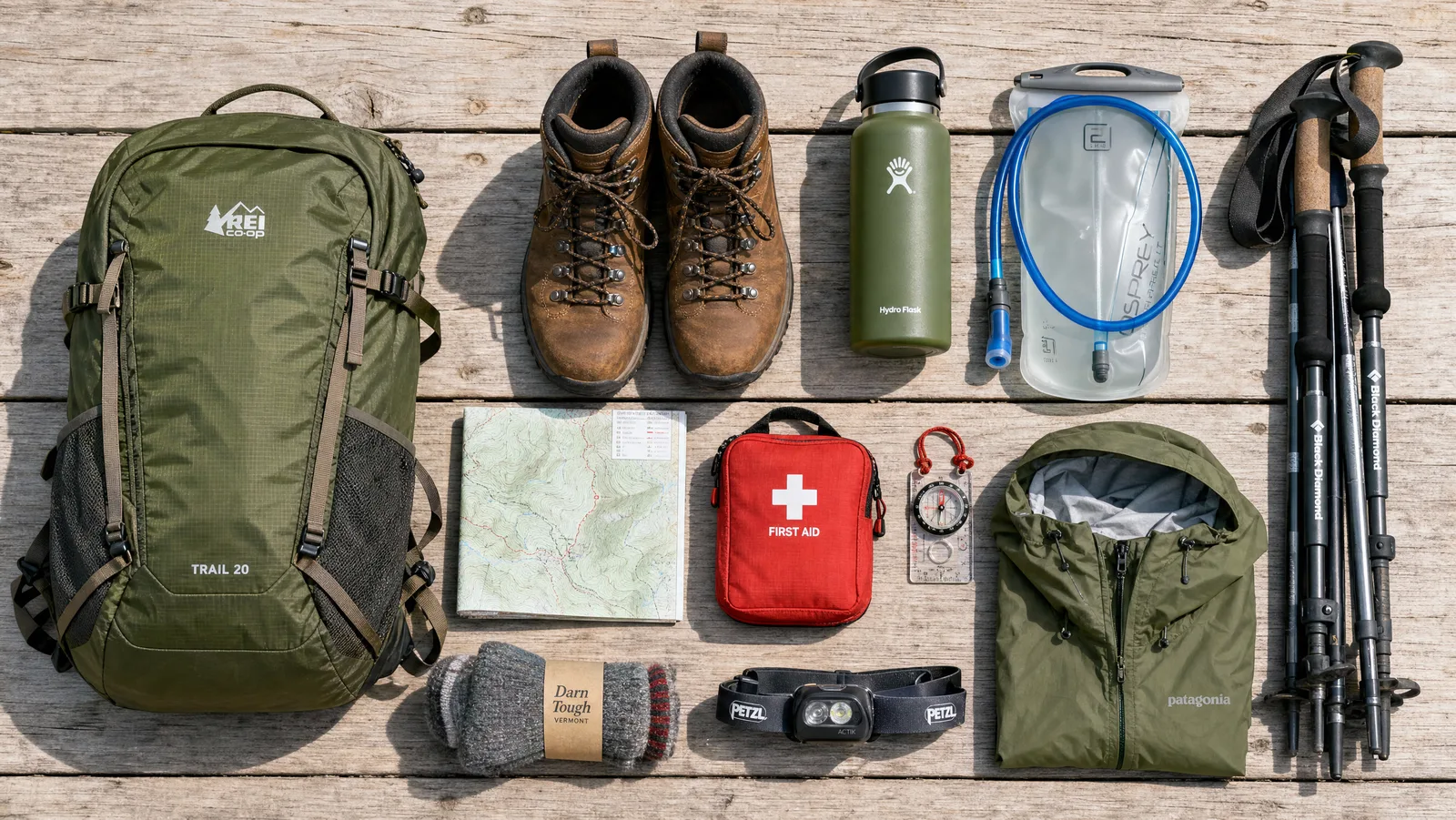
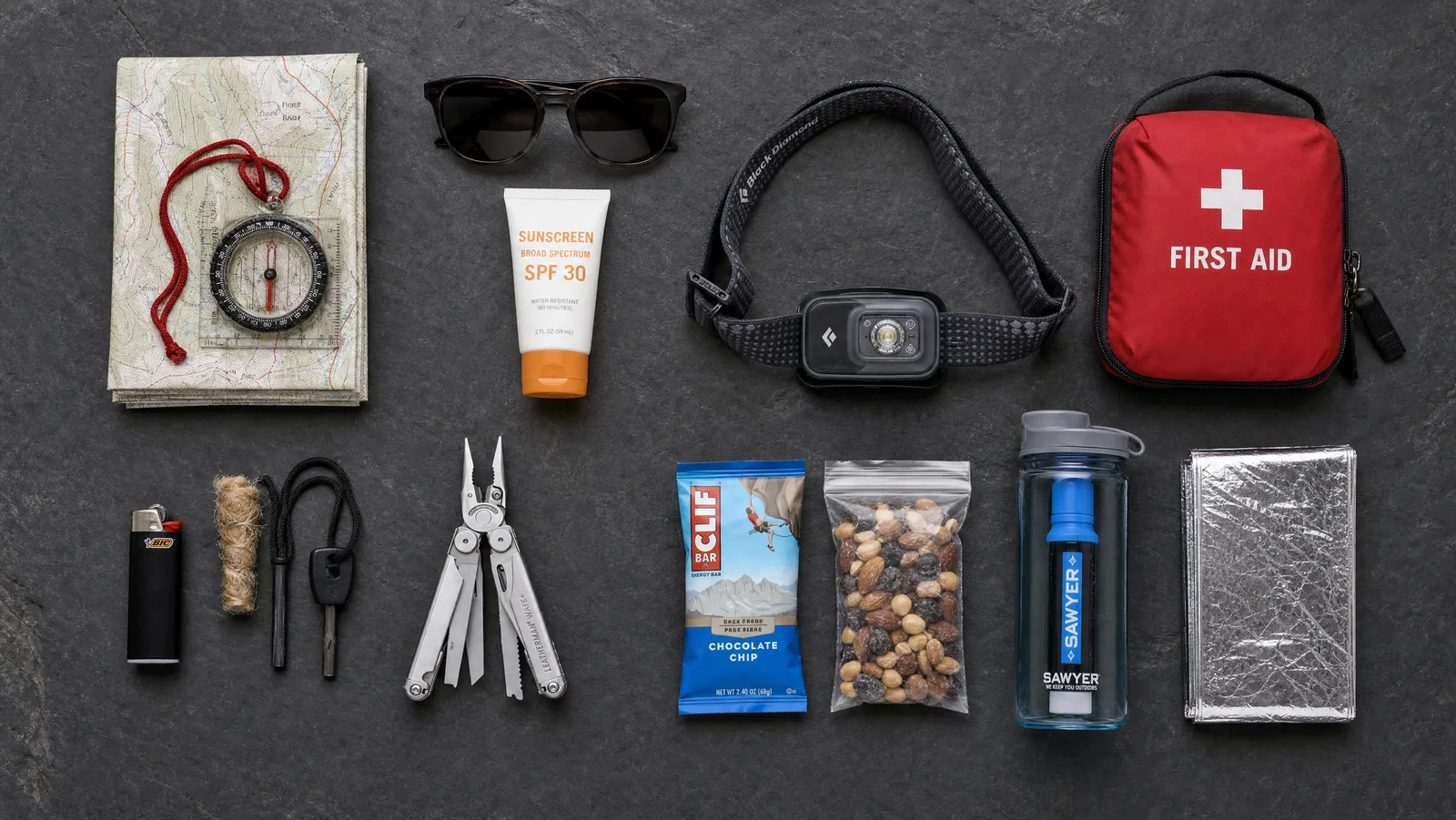
Think about the full kit. No matter how good your boots are, poor navigation, too little water, or inadequate rain gear can ruin a hike. Our hiking gear for beginners checklist walks through every other category—pack, water, navigation, first aid, and layers—so you have the full picture before your first big outing. Footwear is the most important single item; the checklist makes sure nothing else falls through the cracks.
Frequently asked questions
How do I know if I need hiking boots or hiking shoes? Start with three questions: How heavy is my pack? How rough and unmaintained is the terrain? How wet or cold will conditions be? A heavy pack on technical, wet, or off-trail ground calls for a mid boot with waterproofing. A light daypack on a maintained, dry trail is handled better—and more comfortably—by a hiking shoe or trail runner. When in doubt, our boots vs shoes vs trail runners guide walks through the decision with specific terrain examples.
How long do hiking boots last? Most quality hiking boots last somewhere between 500 and 1,000 miles, depending on the construction, terrain type, and how hard you are on them. Rocky, abrasive trails wear outsoles faster than soft dirt. Signs to replace them: lugs are worn smooth (grip is gone), the midsole compresses without rebounding (cushioning is dead), or you start feeling sore knees and feet after hikes that used to feel fine. Inspect the outsole every few months if you hike regularly.
Should hiking boots be waterproof? Not always—it depends on your conditions. Waterproof membranes are worth the trade-off in reliably wet environments: the Pacific Northwest, shoulder-season mountain hikes, routes with significant stream crossings, and cold-weather trips where wet feet become a hypothermia risk. In dry, hot climates or summer trail running conditions, mesh breathes better and dries faster than a membrane-lined boot, and the extra cost of the membrane adds no benefit. Match the membrane to your climate and hiking season, not to marketing.
How should hiking boots fit? Heel locked with almost no vertical slip; roughly a thumb's width of space in front of the longest toe; foot secure at the midfoot without pinching on the sides. Always fit them late in the day wearing the hiking socks you'll actually use on the trail. For the complete fitting and break-in process—including how to lace for different foot shapes—see our dedicated sizing and break-in guide.
Do I need to break in new hiking boots? Yes, especially for stiffer full-grain leather boots and mid or high-cut synthetic models. Start with short neighborhood walks, then progress to easy day hikes, before attempting a long or demanding trail in brand-new footwear. The Merrell Moab line is famously comfortable out of the box—many hikers describe wearing them straight from the store—but even soft boots benefit from a few short miles before a full day on the trail. Never break in new boots on a long multi-day trip.
What about wide feet? Wide feet are extremely common and very compatible with high-quality hiking boots—you just need to shop brands and models that are designed for the shape. KEEN is widely recommended for wide feet because of its anatomically wide toe box and roomy forefoot. Merrell's Moab line also fits wide naturally for many hikers. New Balance offers genuine wide (2E and 4E) hiking options. For a full breakdown of the best choices, see our best hiking boots for wide feet in 2026 guide.
How much should I spend on hiking boots? For a beginner who hikes occasionally on maintained trails, $70–110 buys a genuinely capable and comfortable boot. The Columbia Newton Ridge (around $80–90), Merrell Moab 3 (around $90–120), and Oboz Sawtooth X (around $90) are all solid picks in this range. Premium boots at $150–200+ offer better materials, longer life, and more refined fit systems—worth it if you hike frequently or tackle more technical terrain. Our best budget hiking boots in 2026 guide proves you don't need to spend a lot to get out there safely and comfortably.
Can I use trail running shoes for hiking? Yes—many experienced hikers prefer them for maintained trails and fast-and-light trips. Modern trail runners from brands like Salomon, HOKA, Altra, and Topo Athletic offer serious grip, good cushioning, and durable construction that handles real trail abuse. The trade-offs: less ankle protection, less midsole stiffness under heavy loads, and mesh that offers no waterproofing. For a side-by-side look at how trail runners compare to hiking shoes and boots across every relevant metric, see our boots vs shoes vs trail runners comparison.
The bottom line
The best hiking footwear is the pair that fits your foot, suits your terrain, and gets you out the door without blisters or regrets. Use this guide as your hub: find the article that matches your situation—women's hiking boots, men's hiking boots, waterproof options for wet conditions, budget-friendly picks under $100—and go deep on the roundup that fits. Pair whatever you buy with the right socks, take five minutes to learn proper fit, and break your footwear in before the big hike. The miles after that take care of themselves.
The picks

The Moab ("Mother Of All Boots") has been one of the world's best-selling hiking boots for years, and the third generation earns that reputation again. The mid-cut waterproof upper keeps feet dry in rain and shallow crossings, the Vibram TC5+ outsole grips rock and dirt reliably, and the famously roomy fit suits a wide range of foot shapes—including those who usually find boots too narrow—with almost no break-in required. A genuinely dependable all-day boot at a fair price.

The low-cut women's Moab 3 takes everything that made the boot famous—roomy fit, Vibram TC5+ outsole, minimal break-in—and sheds the ankle collar for a lighter, more breathable package. It is our top recommendation for women doing maintained day trails with a light daypack who want real hiking traction and structure without the bulk or warmth of a full mid boot. The mesh upper ventilates well on hot days while still providing enough structure for rocky trails.
Head-to-head
About the author
Victoria Miller
Victoria Miller is passionate about literature and outdoor adventures. After completing her undergraduate studies at the University of Utah, she spent a year traveling and hiking throughout New Zealand and Europe. She is an avid reader and has a penchant for escaping into worlds of her own creation.