Hiking Boots vs Hiking Shoes vs Trail Runners

Choosing the right footwear is the single most important gear decision before hitting the trail. The wrong choice leads to blisters, fatigue, and twisted ankles — the right one means you barely think about your feet all day. This guide breaks down the three main categories — hiking boots, hiking shoes, and trail runners — so you can pick confidently for your next adventure.
This article contains affiliate links. We may earn a commission if you make a purchase through our links, at no extra cost to you.
For a deeper look at every factor that goes into footwear selection, see our complete guide: How to Choose the Right Hiking Boots and Shoes. And if you already know your category, jump straight to our best hiking boots for men or best waterproof hiking boots roundups.
What is a hiking boot?
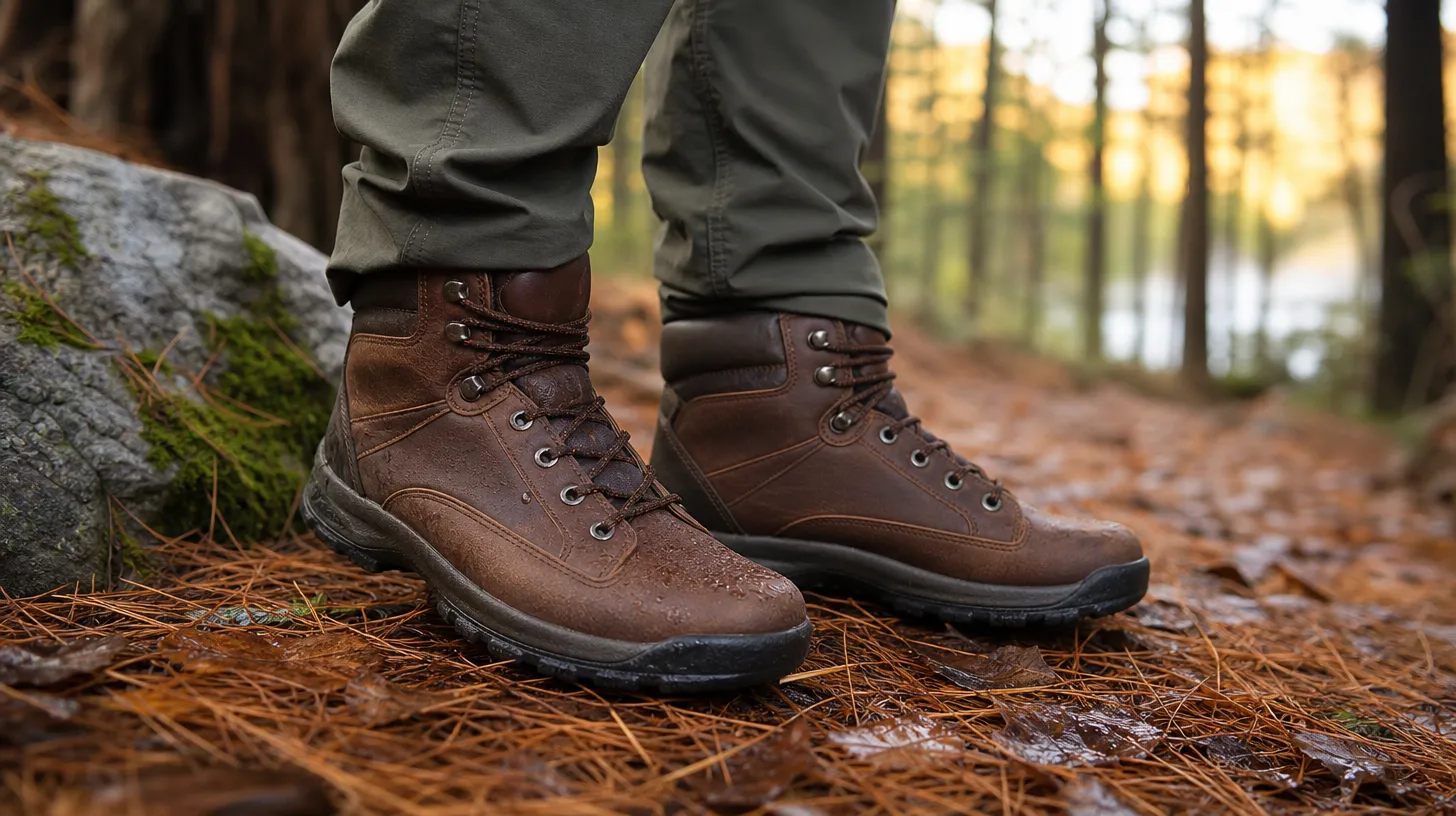
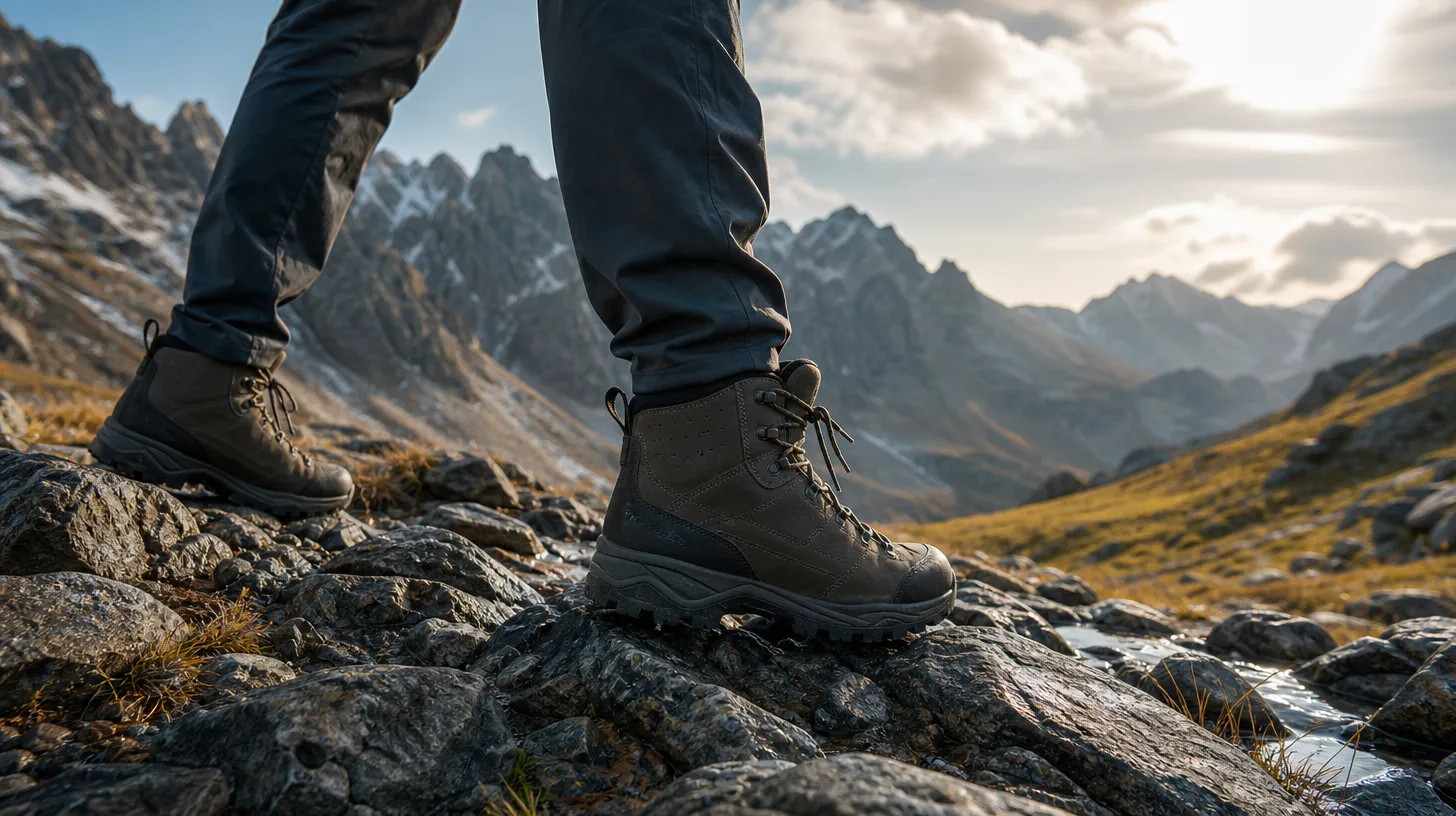
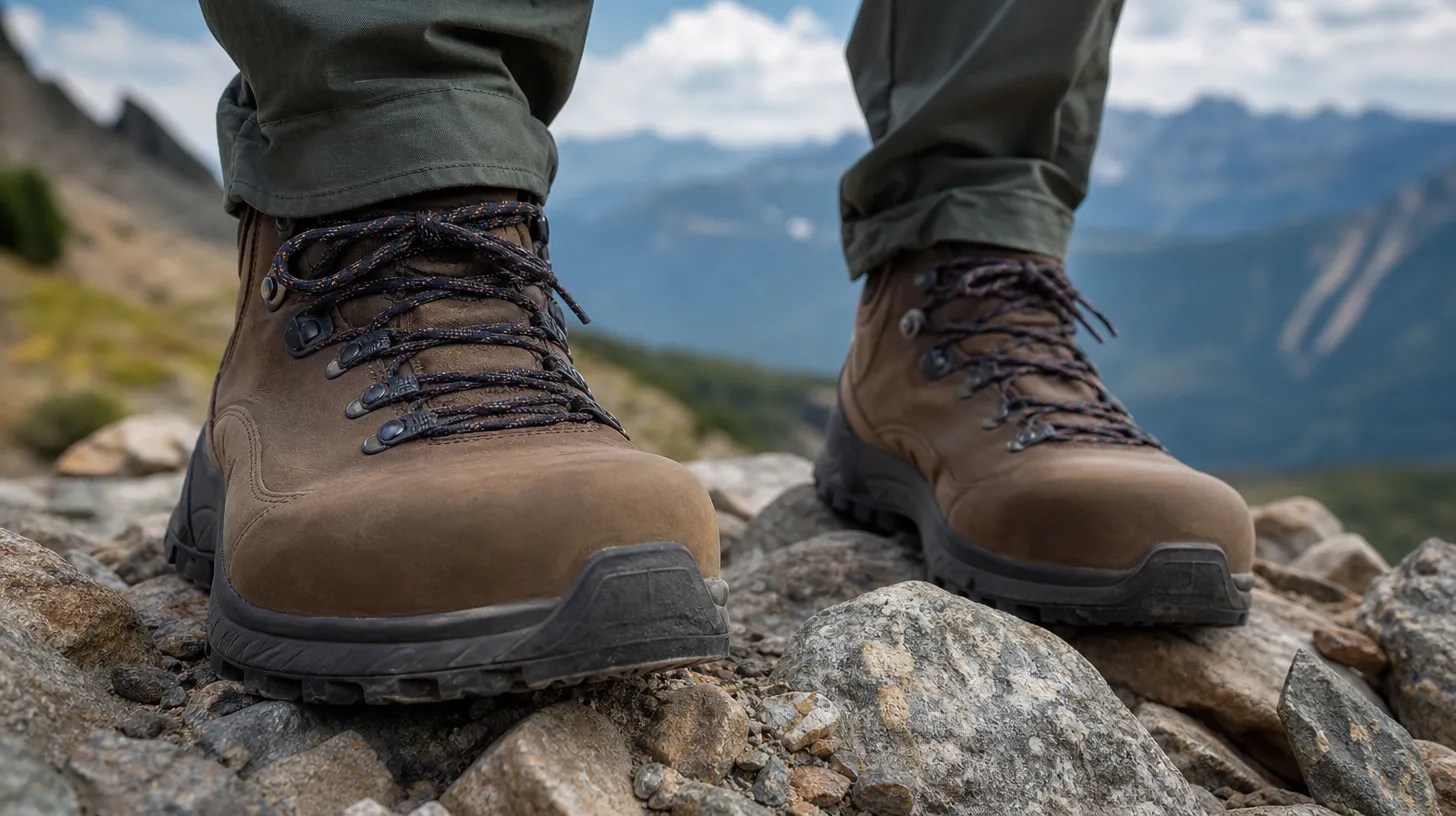
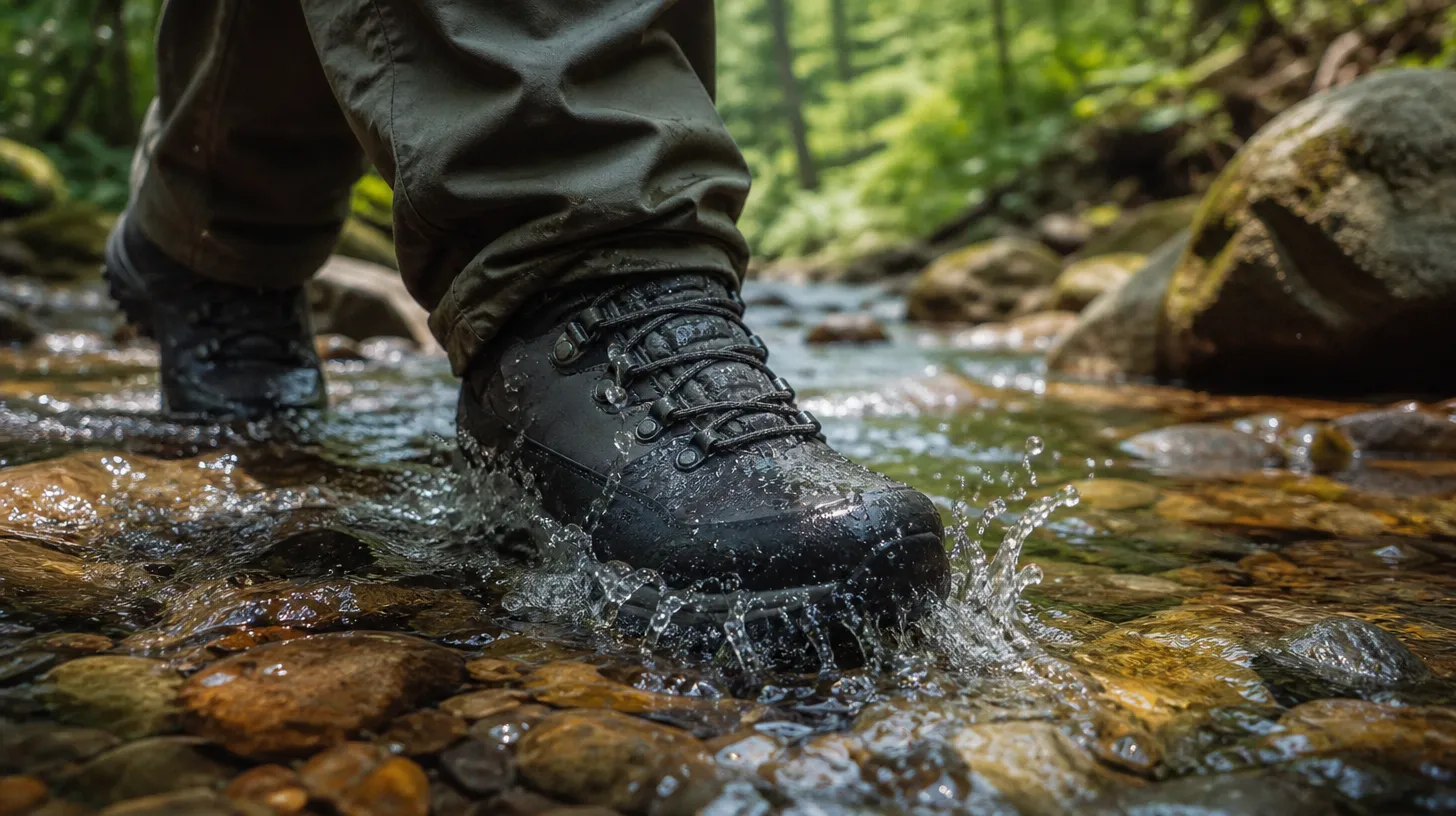
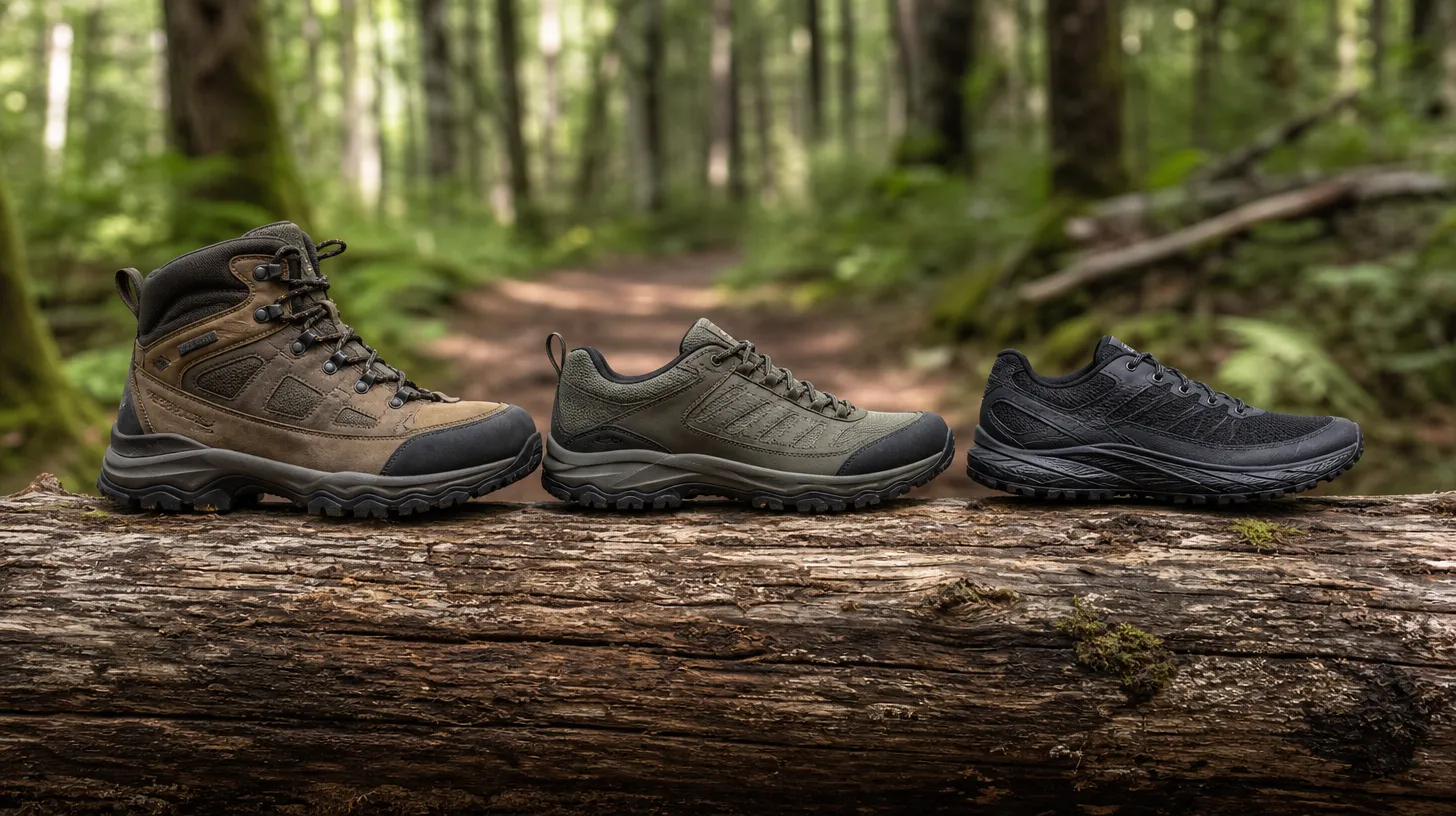
Hiking boots are mid-cut or high-cut footwear that rise above the ankle. They are built for stability and protection on demanding terrain — think rocky ridgelines, off-trail travel, and multi-day backpacking with a heavy pack.
Key characteristics:
- Mid or high collar for ankle coverage
- Stiffer, more protective midsole and outsole
- Typically heavier (800 g–1,400 g per pair)
- Often waterproofed with GORE-TEX, OutDry, or a proprietary membrane
- Substantial heel cup and toe rand for rock and root protection
- May require a break-in period of 10–20 miles
The Merrell Moab 3 Mid Waterproof is probably the world's best-selling hiking boot — thousands of hikers swear by it for good reason: roomy fit, dependable Vibram grip, almost no break-in.
What is a hiking shoe?
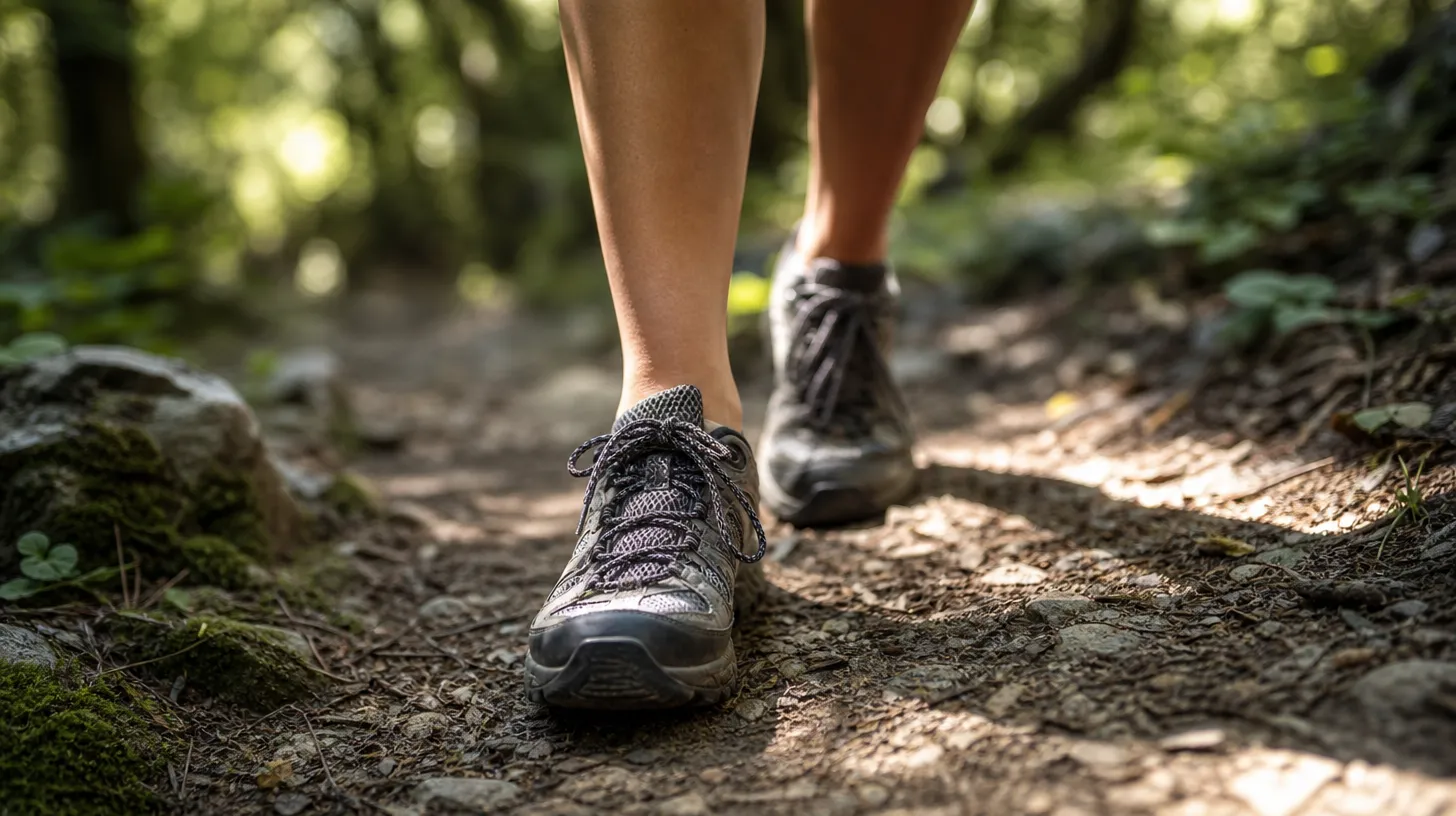
Hiking shoes are low-cut, ankle-free footwear that feel closer to a sturdy sneaker. They share the same rugged outsoles and protective midsoles as boots but lose the cuff, saving weight and allowing a more natural stride.
Key characteristics:
- Low cut — ends at or below the ankle
- Lighter than boots (typically 500 g–800 g per pair)
- Available with or without waterproof membranes
- Easier to put on and more versatile (work for travel and casual use)
- Slightly less ankle coverage but plenty of lateral support through the midsole
- Little or no break-in needed
Hiking shoes are the right call for most day hikers carrying a light-to-moderate pack on well-maintained trails. See our best women's hiking shoes in 2026 and men's hiking shoes guide for our top picks.
What is a trail runner?
Trail running shoes are engineered for fast movement on varied terrain. They borrow road-running cushioning and flexibility but add aggressive lugs, protective rock plates, and reinforced toe bumpers for off-road use.
Key characteristics:
- Very lightweight (300 g–550 g per pair)
- Highly breathable, fast-drying mesh upper (waterproof versions exist but are rarer)
- Low heel-to-toe drop, often zero-drop, encouraging a more natural gait
- Less structural rigidity — more ground feel, less protection
- Excellent for fast-and-light hiking, running, and thru-hiking where fatigue matters most
- Dry out quickly after a stream crossing
The Altra Lone Peak 8 is a classic example: zero drop, a wide FootShape toe box, and balanced cushioning make it a cult favourite among long-distance hikers.
Head-to-head comparison table
| Feature | Hiking Boot | Hiking Shoe | Trail Runner | |---|---|---|---| | Weight | Heavy (800–1,400 g/pr) | Medium (500–800 g/pr) | Light (300–550 g/pr) | | Ankle support | High (mid/high collar) | Low (midsole support only) | Low (flexible collar) | | Rock & root protection | Excellent | Good | Moderate | | Breathability | Lower (esp. waterproof) | Medium | High | | Waterproofing | Widely available | Available | Less common | | Durability | 500–1,000 miles | 400–800 miles | 300–500 miles | | Traction | High (stiff, grippy lugs) | High (flexible, grippy) | High (fast-drying lugs) | | Best terrain | Rocky, off-trail, heavy pack | Day hikes, mixed trails | Fast hiking, thru-hikes, running | | Break-in required | Often yes | Rarely | No |
Myth-busting: are boots always safer for your ankles?
This is probably the most persistent piece of trail folklore — and the evidence doesn't fully support it. Several large studies of military recruits and recreational hikers have found no clear advantage to high-cut boots in preventing ankle sprains; some suggest that lighter footwear reduces trip-and-fall risk by lowering fatigue.
What boots do offer is proprioceptive feedback on rough ground and leverage resistance under a heavy pack. That matters when you're carrying 40+ lbs on a rocky off-trail route. On a well-groomed day-hike trail with a 20-lb pack, a supportive hiking shoe — like the options in our men's hiking shoes guide — gives most hikers equal or better performance at less fatigue cost.
The real ankle-protection variables are: fitness and conditioning, trail quality, pack weight, and how well your footwear fits. A perfectly fitted hiking shoe beats a loose-fitting boot every time.
Which should you choose?
Choose a hiking boot if…
- You're carrying a heavy pack (30 lbs or more) on a multi-day trip
- Your route involves rough, off-trail, or boulder-field terrain
- You hike in wet, cold, or snowy conditions and want maximum waterproofing
- You have a history of ankle instability and find the extra cuff reassuring
- The extra weight doesn't bother you and you prefer a planted, secure feel underfoot
Choose a hiking shoe if…
- You're a day hiker or weekend backpacker with a moderate pack (under 30 lbs)
- You hike on maintained trails — dirt paths, gravel, packed earth, some rocky sections
- You want something that doubles as a travel shoe or everyday sneaker
- You prefer lighter weight and more breathability without sacrificing trail durability
- Break-in time is a concern — you want to be ready for a trip this weekend
Choose a trail runner if…
- You move fast — you run, run-hike, or want to cover big miles with minimal fatigue
- You're a long-distance or thru-hiker and weight savings compound over hundreds of miles
- You hike in warm, dry climates where drying speed matters more than waterproofing
- You have a low-drop, natural-gait preference (especially Altra fans)
- You want maximum breathability and are OK with replacing footwear more frequently
Our three representative picks
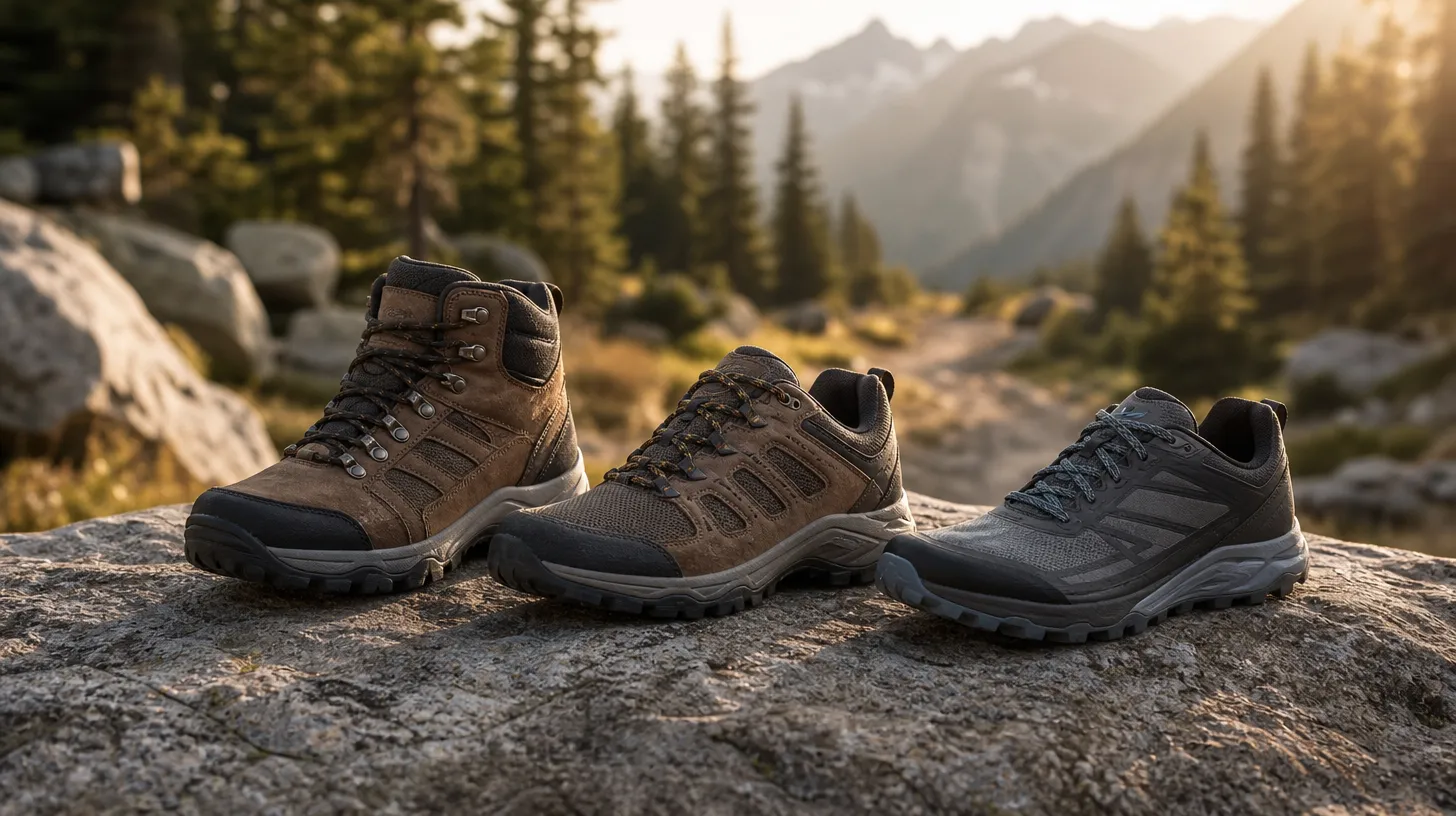
We're featuring one shoe per category below — not as definitive "bests" (see our full roundups for that), but to illustrate what each category actually feels like underfoot.
Merrell Men's Moab 3 Mid Waterproof — representative boot
The Moab 3 Mid is the archetypal hiking boot: a waterproof nubuck upper with a breathable M Select DRY membrane, a cushioned Kinetic Fit Base footbed, and a Vibram TC5+ outsole that grips wet rock and packed dirt equally well. The mid collar adds meaningful ankle coverage without feeling restrictive, and the Moab's famously roomy fit means most hikers can wear it straight out of the box. Around $117 as of mid-2026.
Merrell Women's Moab 3 Hiking Shoe — representative hiking shoe
Drop the cuff, keep everything else — that's the Moab 3 low. The same Vibram TC5+ outsole, the same wide-friendly last, the same durable suede-and-mesh upper, but in a lighter, low-cut package that breathes better and needs zero break-in. It's the most natural transition for anyone moving from sneakers to trail footwear. Around $126 as of mid-2026.
Altra Women's Lone Peak 8 — representative trail runner
Altra's Lone Peak is the benchmark zero-drop trail runner. A FootShape toe box lets your toes splay naturally, the balanced cushioning (same stack front-to-back) promotes a midfoot strike, and the MaxTrac outsole grips across loose dirt, rock, and root equally well. At roughly 520 g per pair (women's), it's dramatically lighter than any boot — and that weight difference becomes very noticeable by mile 10 of a long day. Around $104 as of mid-2026.
How weight, terrain, weather, and personal needs drive the decision
Pack weight is the clearest tiebreaker. Under 20 lbs, a hiking shoe or trail runner performs as well as a boot for most hikers. Over 35 lbs, a boot's added rigidity earns its weight penalty by reducing foot fatigue and improving stability on uneven ground.
Terrain matters almost as much. Well-graded, maintained trails suit low-cut shoes. Rocky, root-choked, or off-trail routes reward boot-level toe and sole protection.
Weather tips the waterproofing question. If you hike in the Pacific Northwest, Scotland, or anywhere with reliable rain and cold stream crossings, a waterproof membrane pays off. In the dry American Southwest or during summer, you'll likely prefer the breathability of mesh — and a trail runner that dries in 20 minutes beats a waterproofed shoe that stays damp for hours.
Personal needs: If you have wide feet, look for brands known for roomier lasts (Merrell, KEEN, Altra, New Balance). If you have flat arches or pronate, many boots and hiking shoes now include built-in stability features. And if you're brand-new to the trail, a hiking shoe is usually the lowest-friction place to start.
Frequently asked questions
Do I need hiking boots for day hiking? Not necessarily. For most day hikes on established trails with a light daypack, a well-fitted hiking shoe provides plenty of support and protection — and you'll feel less fatigued at the end of the day because of the lower weight. Boots become worth their weight when terrain is rough, the pack is heavy, or weather is wet and cold.
Are hiking shoes vs trail runners that different? Yes — in meaningful ways. Hiking shoes are built with thicker, stiffer midsoles and more protective uppers aimed at slow-to-moderate hiking. Trail runners prioritise light weight, flexibility, and breathability for faster movement. A trail runner in hiking conditions wears out faster and offers less lateral stability; a hiking shoe in running conditions feels heavy and stiff.
Can I wear trail runners for backpacking? Yes, and many experienced thru-hikers prefer them. The key is keeping pack weight reasonable (ideally under 25 lbs), choosing a model with a rock plate if the route has lots of sharp debris, and accepting that you'll likely replace them at each resupply. The weight savings — 300–500 g per shoe — add up to significantly less fatigue over a 500-mile trail.
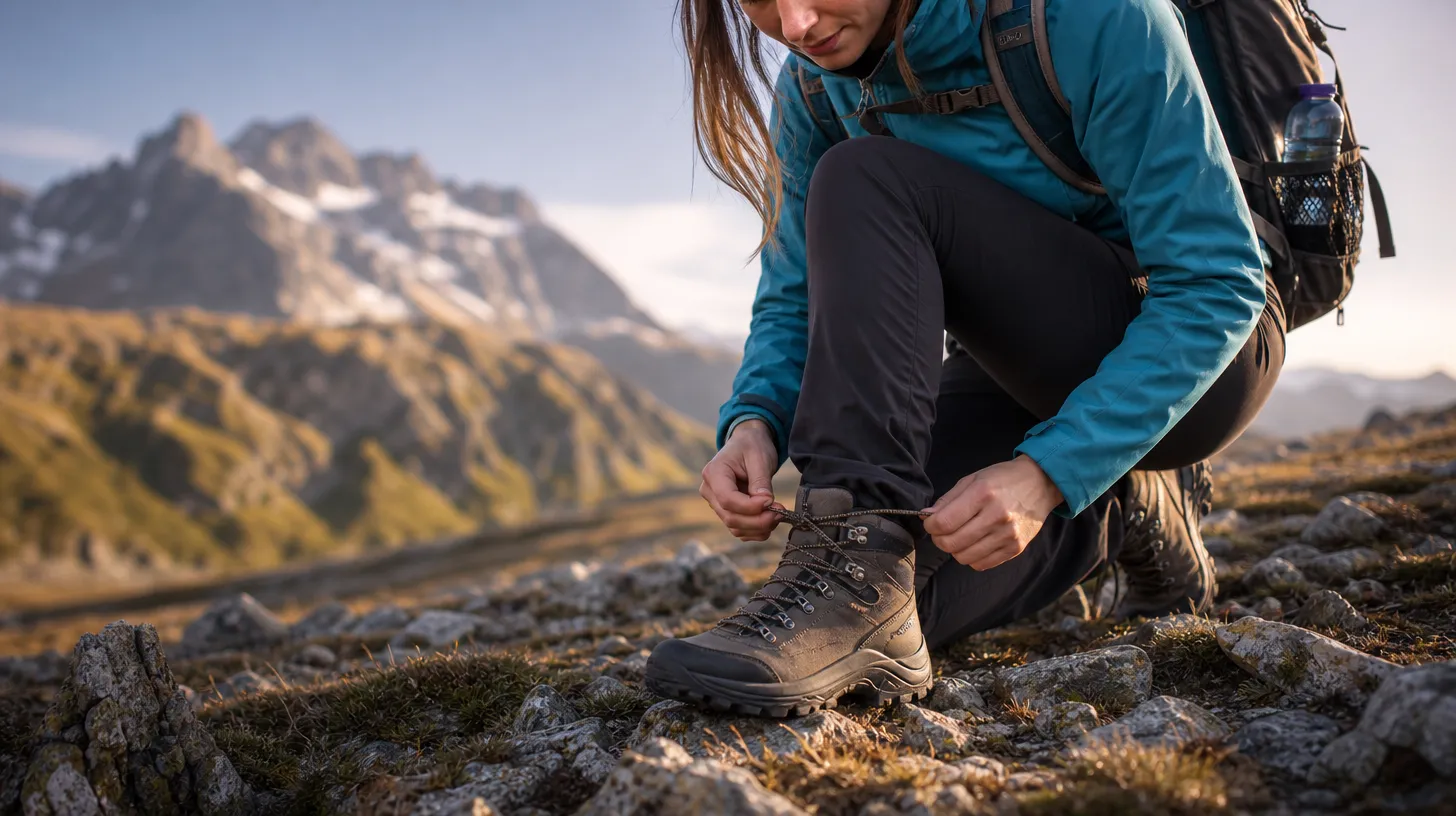
How do I know if a boot fits correctly? Your heel should lock snugly with no lift. Your toes should be able to splay (wiggle) without touching the front of the boot. Try boots on late in the day (feet swell), wear your actual hiking socks, and walk downhill on a slope to test toe slippage. If your toes slam the front on descent, size up half a step. For more detail, see our boot fit and sizing guide.
Do waterproof boots keep your feet dry all day? In light rain and shallow puddles, yes. But waterproof membranes have limits: once water overtops the collar — from deep stream crossings, sustained downpours, or sweat accumulation — moisture is trapped inside and dries slowly. Non-waterproof trail runners, by contrast, soak quickly but dry in 15–30 minutes. For warm-weather hiking, breathable non-waterproof footwear is often the more comfortable call.
How long do hiking boots last compared to trail runners? A quality hiking boot typically lasts 500–1,000 miles. Trail runners, with their lighter construction, usually need replacing at 300–500 miles. Hiking shoes fall in between at 400–800 miles. Rocky, abrasive terrain eats through outsoles faster than packed dirt.
Conclusion
The tiebreaker almost always comes down to two variables: pack weight and terrain. Under 20 lbs on a maintained trail, a hiking shoe handles the job better than most people expect — lighter, more breathable, and no break-in. Over 35 lbs on rough or off-trail ground, a boot earns its weight penalty in stability and protection. Trail runners are the specialist's tool: unbeatable for fast-and-light hiking and thru-hiking, but they ask you to trade protection and durability for speed.
For most day hikers just getting started, we'd say begin with a hiking shoe. It's the most forgiving category — versatile enough for 90% of trail conditions, comfortable enough to wear off-trail, and light enough that you'll actually enjoy the miles.
For a full breakdown of what to look for — lasts, membranes, drop, outsole patterns, and sizing — visit our in-depth guide: Hiking Footwear: How to Choose the Right Boots and Shoes.
Ready to shop by category? We've done the legwork:
The picks

The Moab 3 Mid is the archetypal hiking boot and one of the world's best-selling trail shoes. A waterproof M Select DRY membrane keeps feet dry on wet trails, while the Vibram TC5+ outsole delivers reliable grip on rock, dirt, and packed gravel alike. The roomy, wide-friendly last needs almost no break-in, the cushioned Kinetic Fit Base footbed absorbs impact all day, and the mid collar adds ankle coverage without restricting movement. A dependable all-rounder for three-season hiking.

The Moab 3 low-cut shoe strips the boot collar and saves meaningful weight while retaining the same trusted Vibram TC5+ outsole, supportive midsole, and durable suede-and-mesh upper. The women's-specific last fits a wider range of foot shapes than most low-cut competitors, and the breathable construction keeps feet cooler on warm-weather day hikes. It needs zero break-in, handles light mud and rocky singletrack with ease, and doubles as a comfortable travel shoe.
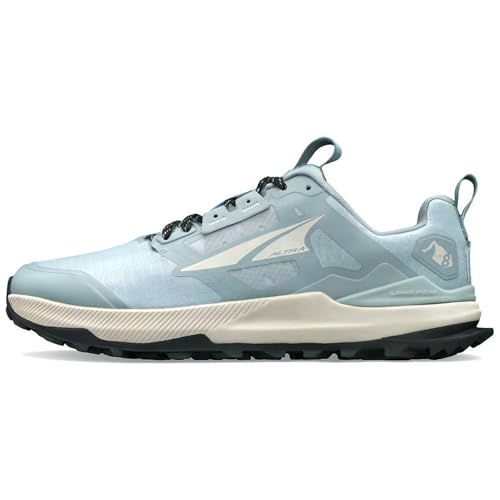
The Lone Peak 8 is the benchmark zero-drop trail runner favoured by long-distance hikers and thru-hikers worldwide. Altra's FootShape toe box lets your toes splay naturally rather than compress together, reducing hotspots and fatigue on long days. Balanced cushioning — same stack height heel-to-toe — promotes a natural midfoot strike. The MaxTrac outsole grips confidently across loose dirt, rock, and wet root. At roughly 520 g per pair it is dramatically lighter than any boot, which compounds into less fatigue over miles.
Head-to-head
About the author
Victoria Miller
Victoria Miller is passionate about literature and outdoor adventures. After completing her undergraduate studies at the University of Utah, she spent a year traveling and hiking throughout New Zealand and Europe. She is an avid reader and has a penchant for escaping into worlds of her own creation.